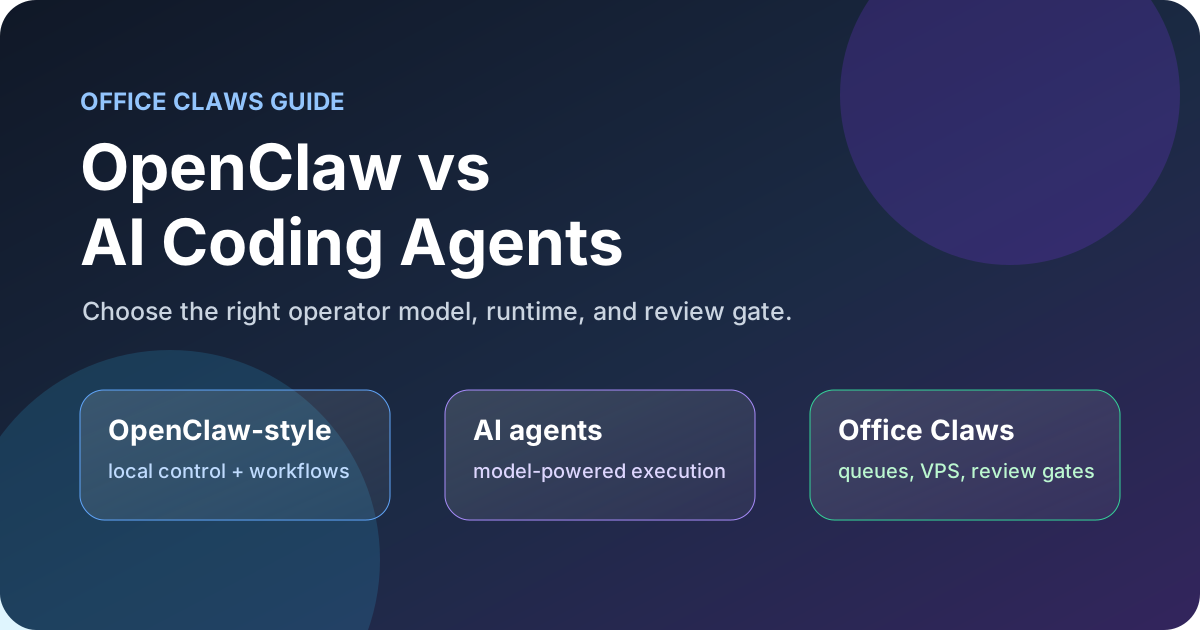
OpenClaw vs. KI-Coding-Agenten ist vor allem eine Frage des Betriebsmodells. Ein Agent kann Dateien ändern; ein OpenClaw-artiger Workflow klärt Kontrolle, Secrets, Logs und Review. Office Claws ist keine native OpenClaw-Laufzeit, sondern die Desktop- und VPS-Steuerungsschicht für OpenClaw-nahe Teams mit Codex-gestützter Ausführung.
OpenClaw vs AI Coding Agents: The Practical Difference
A generic AI coding agent works best for small, bounded tasks: tests, copy changes, bug explanations, and refactor drafts. The operator is usually one developer watching one checkout. That is fast and useful, but it does not automatically create a safe team workflow.
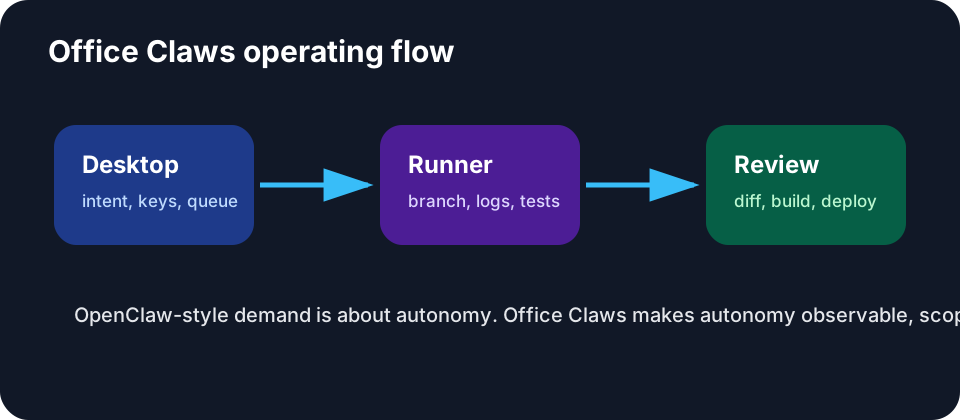
An OpenClaw-style model adds an operating contract: one task, one branch, one runner, one durable log stream, and one explicit review gate. This matters when tasks run for hours, use dependencies, touch deployment files, or need to continue after a laptop sleeps.
| Area | Generic agent | OpenClaw-style operation |
|---|---|---|
| Control | Terminal, IDE, or chat | Queue, approvals, logs, stop button |
| Runtime | Usually local | Local desktop plus isolated VPS runners |
| Security | Often inherits shell secrets | Scoped credentials and smaller blast radius |
| Team use | Manual handoff | Branch-per-task with validation output |
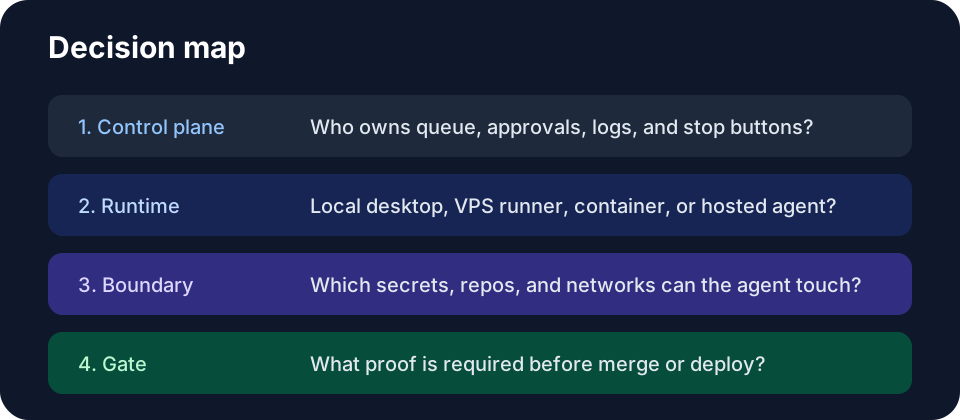
Four Questions Before You Choose
- Who owns the control plane and can stop the task?
- Where does execution run: local checkout, VPS, container, or hosted worker?
- Which secrets and networks can the agent reach?
- What proof is required before merge or deployment?
That is why Office Claws for OpenClaw users keeps command and review close to the desktop while allowing isolated runners for heavier work. For runtime tradeoffs, compare OpenClaw vs Codex, OpenClaw sandbox, and OpenClaw background tasks.
agent_task:
  branch: one-task-one-branch
  runner: disposable-local-or-vps
  secrets: scoped-and-reviewed
  validation:
    - tests
    - production build
    - human review before merge
Empfehlung
Use a generic AI coding agent for tiny, local, easy-to-review work. Use an OpenClaw-style operating model when the work needs isolation, uptime, collaboration, or repeatable review gates.
Office Claws gives OpenClaw-adjacent teams desktop management, VPS runner provisioning and monitoring, Codex-backed execution, safer local key handling, and visible validation before merge or deploy.