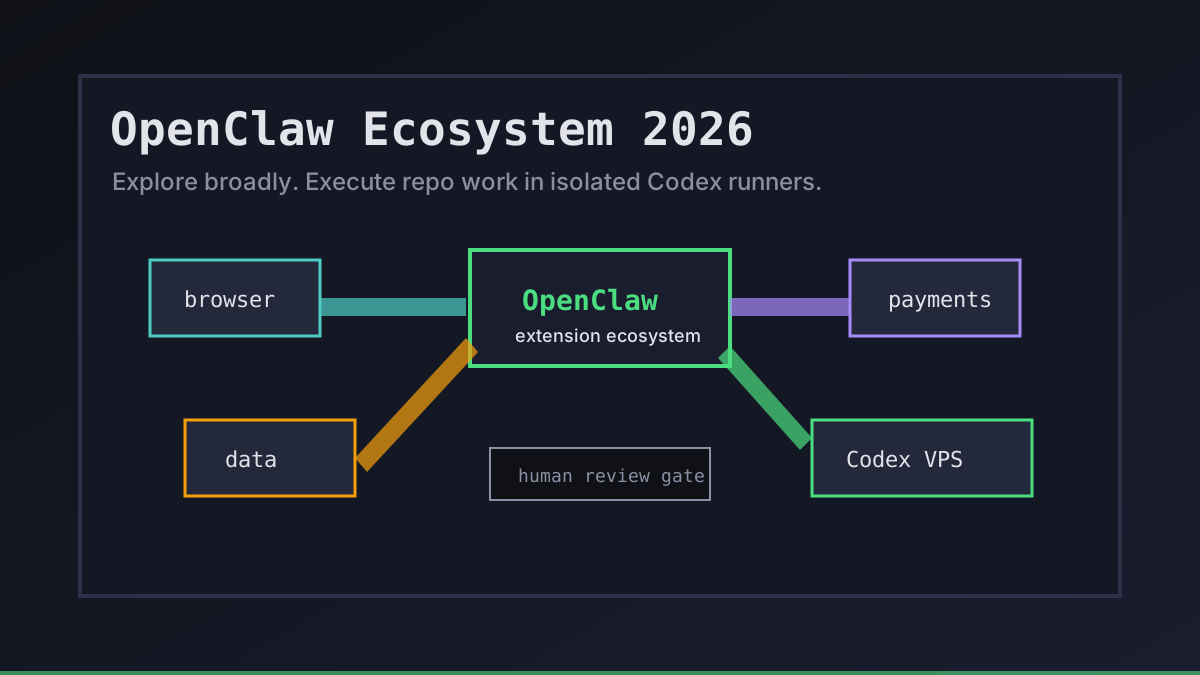
OpenClaw has become the agent ecosystem people point to when they want breadth: browser flows, payments, data tools, MCP servers, and community extensions all in one runtime. That makes it exciting in 2026. It also makes the decision harder for developers who mostly need to ship code.
This guide is our map of the ecosystem: what belongs in OpenClaw, what should move to a repo-centered Codex runner, and how to keep the boundary honest.
The Ecosystem Is Broader Than Coding
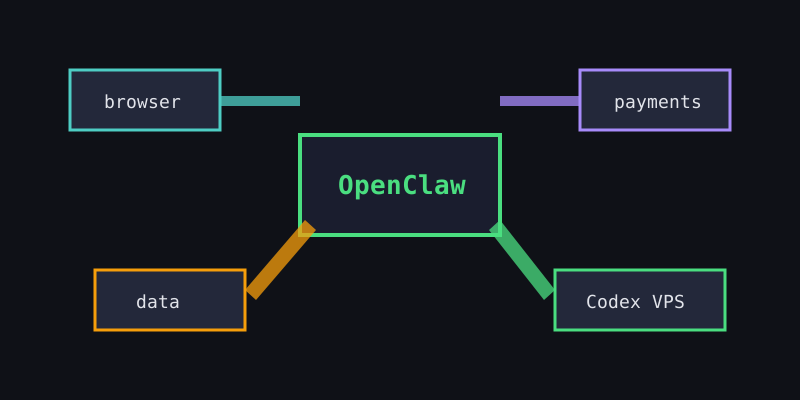
OpenClaw is not just another terminal coding assistant. The interesting part is the surrounding ecosystem: Tencent QClaw-style consumer flows, Alipay AI Pay experiments, market-data integrations, browser automation, custom tools, and model-provider flexibility.
That breadth matters when the job is not purely software engineering. A workflow that researches a page, calls a data source, drafts a payment step, and then writes glue code is naturally OpenClaw-shaped. A narrower tool can imitate parts of that flow, but the extension ecosystem is the point.
| Ecosystem layer | Good fit for OpenClaw | Better moved to Codex |
|---|---|---|
| Browser and business tools | Yes | Rarely |
| Payment or data integrations | Yes, with strict review | Only the code slice |
| Repo edits and tests | Sometimes | Usually |
| Overnight branch work | Risky without isolation | Yes, on a persistent runner |
The Risk Grows With Every Extension
The same openness that makes OpenClaw powerful expands the trust zone. Every extension, MCP server, browser session, and credential path becomes part of the agent's effective environment. That is manageable, but only if teams treat it as infrastructure rather than magic.
A basic 2026 checklist looks like this:
1. Install only extensions you can name and explain.
2. Keep credentials scoped, short-lived, and separate by workflow.
3. Run risky jobs in disposable workspaces or isolated VPS runners.
4. Review logs and diffs before anything touches production.
5. Move long code tasks to a branch-based runner with clear ownership.
We covered the security angle in more depth in our OpenClaw safety guides. The short version is simple: if the agent can reach a tool, assume the workflow can reach it too.
Use Codex for the Repo-Centered Slice
Most developers do not need one agent to own the whole ecosystem all day. They need a clean split. Use OpenClaw to explore broad workflows, then move the repo-centered slice to Codex once the job becomes "edit files, run tests, push a branch."
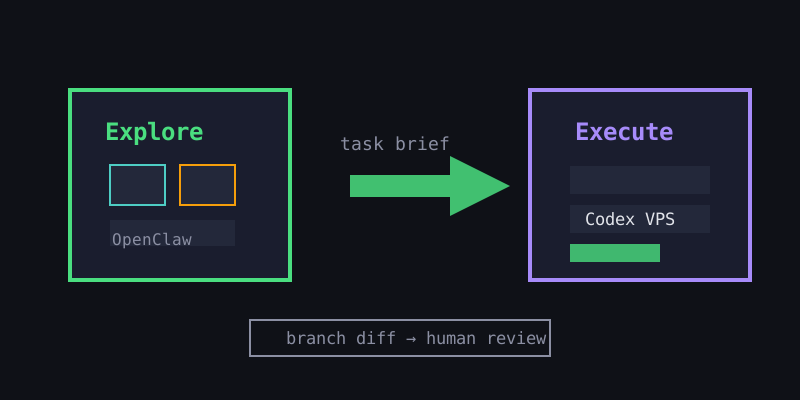
That is where Office Claws fits. We are Codex-first, not an OpenClaw runtime. Office Claws gives OpenClaw users a practical off-ramp for the coding part: provision a VPS, connect with Tailscale, run persistent Codex sessions, watch agent state from the pixel office, and review the branch before merge.
If you are comparing the two tools directly, start with our OpenClaw vs Codex comparison. If you already know the coding slice should be persistent, the Office Claws for OpenClaw users path keeps the bill predictable: Self-Hosted is $4.99/month and Managed starts at $14.99/month.
A Practical 2026 Architecture
We like a layered approach because it lets each tool stay good at its job.
| Layer | Primary tool | Review gate |
|---|---|---|
| Explore the workflow | OpenClaw | Notes and trace review |
| Define the coding task | Human + OpenClaw | Issue or task brief |
| Execute repo changes | Codex on VPS via Office Claws | Branch diff and tests |
| Ship | Human reviewer | Pull request merge |
This is not anti-OpenClaw. It is pro-boundary. Let the ecosystem handle broad, multi-tool discovery. Let Codex handle durable coding execution. Let humans own credentials, review, and merge decisions.
Recommendation
Treat the OpenClaw ecosystem as a powerful exploration layer in 2026, especially when your workflow crosses browsers, payments, data sources, and custom tools. Do not force it to be your long-running coding infrastructure just because it can edit code.
For repo work, narrow the loop. Put Codex on an isolated VPS, keep one branch per runner, watch progress in Office Claws, and review before merge. That gives OpenClaw users the upside of the ecosystem without turning every coding task into an unbounded trust problem.