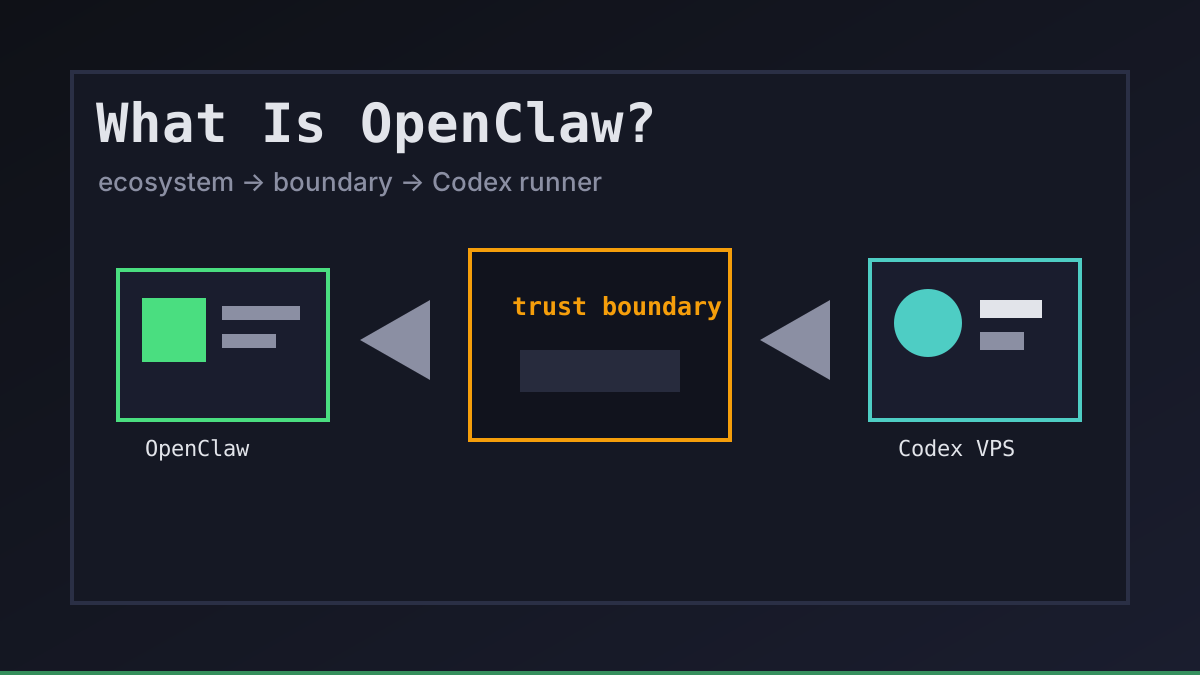
OpenClaw became one of those names developers hear before they have a clean mental model for it. Some teams treat it as an agent framework. Some treat it as a subscription story. Some only found it after an integration or billing path changed under them.
Here is the practical version: OpenClaw is useful when you are exploring broad agent workflows, but repo-centered coding work often needs a narrower runner, clearer costs, and a review boundary. That is where Codex on a VPS, managed through Office Claws, becomes the safer shape.
What OpenClaw Means in Practice
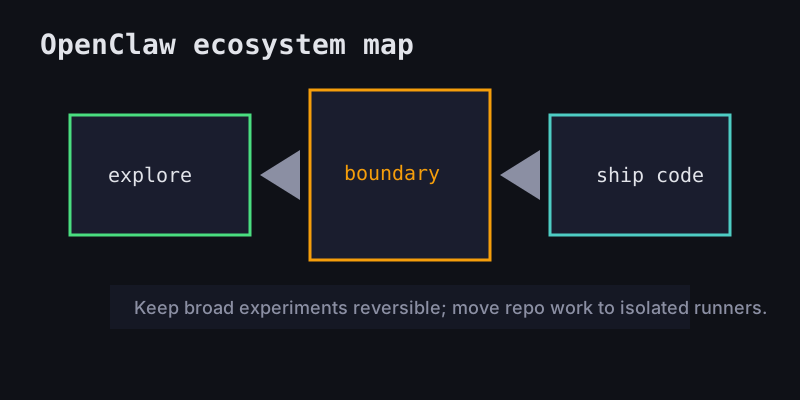
OpenClaw is best understood as an agent ecosystem rather than a single workflow guarantee. It can sit near browser work, tool calling, payments experiments, and coding tasks. That breadth is the point, but it also makes the operational boundary fuzzy.
For developers, the important question is not “is OpenClaw good?” It is “which part of my work should live in OpenClaw, and which part should move into a more predictable coding runner?”
| Workload | Better fit | Why |
|---|---|---|
| Exploring a new agent shape | OpenClaw | Flexible framework surface |
| Editing a repo for hours | Codex on VPS | Narrow trust boundary and persistent runtime |
| Running tests overnight | Codex on VPS | Survives laptop sleep and network drops |
| Comparing agent economics | Codex + Office Claws | Subscription math is easier to model |
Where OpenClaw Gets Risky
The risky moment is when a broad agent environment starts holding production secrets, writing to a real repository, and running for hours without a human watching the terminal. That is not unique to OpenClaw; it is true for every powerful agent stack. But broad systems make it easier to blur boundaries.
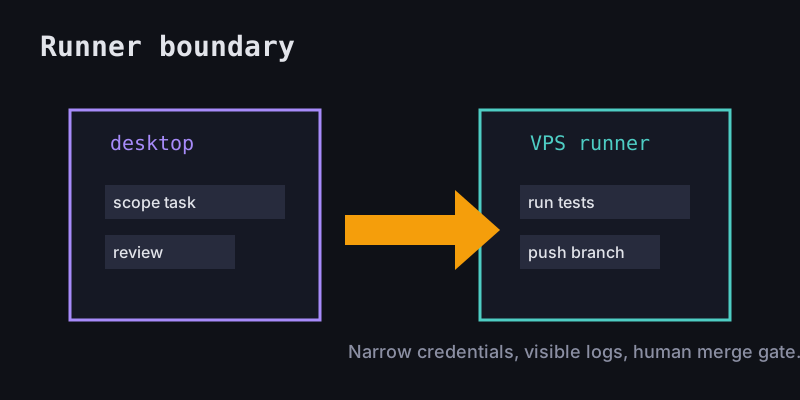
Our rule is simple: keep exploration local and reversible; move long-running repo work to an isolated runner. That runner should have its own branch, scoped credentials, visible logs, and a human review gate before merge. The OpenClaw vs Codex comparison covers the tradeoff in more detail.
The Codex Migration Shape
When an OpenClaw workflow is mostly coding, the migration shape is clean:
local exploration -> scoped task -> Codex runner on VPS -> branch -> human reviewOffice Claws does not pretend to be a native OpenClaw runtime. The honest pitch is narrower: Office Claws for OpenClaw users gives coding-heavy teams a visible desktop layer for Codex runners, quick VPS provisioning, Tailscale networking, and multi-agent supervision.
That matters because most coding-agent failures are boring operational failures: the laptop sleeps, the SSH session dies, logs disappear, two agents edit the same files, or a token bill surprises someone on Friday. A small always-on runner fixes more of that than another abstract diagram.
Recommendations
Use OpenClaw when you are still discovering the agent shape. Keep credentials tight, keep the run short, and do not pretend exploration is production.
Use Codex on a VPS when the task becomes repo-shaped: read code, edit code, run tests, open a branch, wait for review. If you want a managed desktop layer around that workflow, start with Office Claws pricing and read the OpenClaw vs Codex guide before moving real work.
The goal is not to pick a tribe. The goal is to put each agent in the boundary where it fails safely.