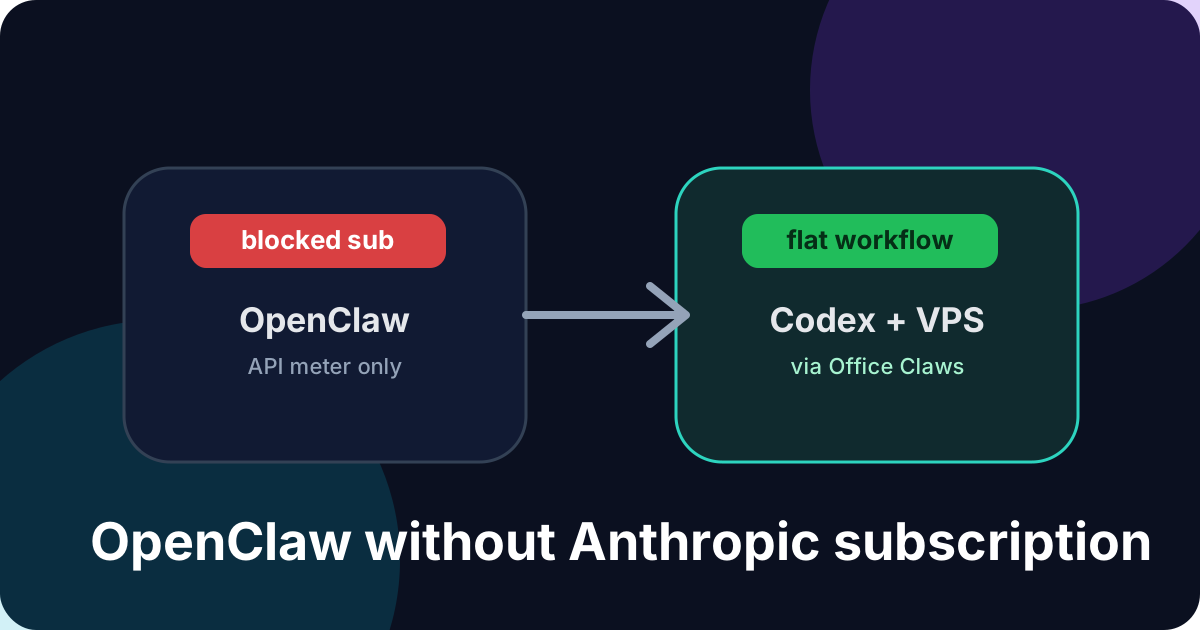
OpenClaw without Anthropic subscription access is not dead, but it is a different operating model. The old shape was simple: pay a fixed subscription, run the agent, and worry mostly about rate limits. The new shape is sharper: OpenClaw can still run through the Anthropic API, but every long context read, retry, and overnight loop becomes a metered event.
That does not mean everyone should abandon OpenClaw. It means you need to split your workloads. Keep OpenClaw where the OpenClaw ecosystem is the point. Move repo-centered coding work to a flatter Codex workflow when the bill shape matters more than framework breadth. Office Claws is not a native OpenClaw runtime; it is the desktop manager OpenClaw users switch to when coding agents need isolated VPS hosting and Codex subscription economics.
The first decision: ecosystem or economics
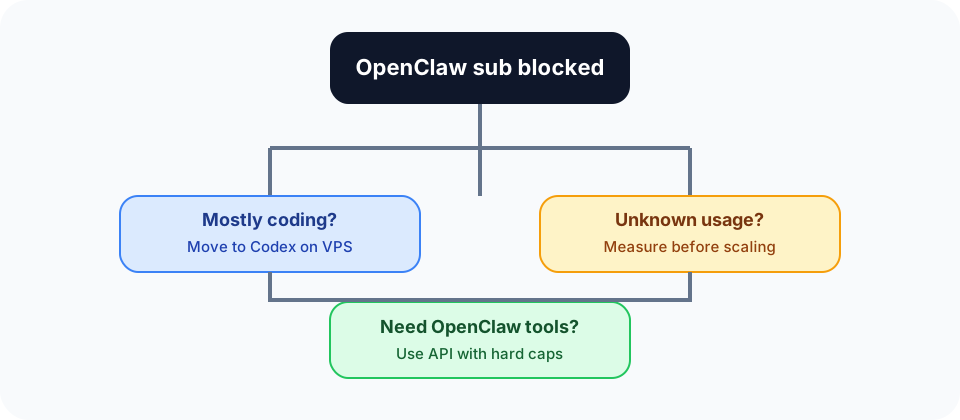
Ask one question before touching tooling: is your workload valuable because it is OpenClaw-specific, or because it is a coding agent that happens to run inside OpenClaw?
If you rely on OpenClaw-native integrations, browser/payment flows, or a multi-provider agent framework, the API path may be worth paying for. Put hard caps around it and keep going. If the work is mostly reading a repository, editing files, running tests, and opening a branch, you are paying API rates for a workflow Codex can usually handle under a subscription.
| Workload | Better fallback | Why |
|---|---|---|
| OpenClaw-native integrations | Anthropic API with caps | Framework behavior matters |
| Long coding sessions | Codex on a VPS | Flat subscription economics |
| Unmeasured experiments | Short API trial | Learn token burn first |
| Team-controlled automation | API budget per job | Finance can allocate spend |
What API-only OpenClaw needs
If you stay on OpenClaw through Anthropic API billing, treat the agent like production infrastructure. Set provider spend caps before the first run. Add task timeouts. Log token use by job. Avoid unlimited overnight sessions until you have a week of measurements.
The minimum safe setup is boring but effective: one API key per environment, a daily budget, alerts at 50% and 80%, and a runner you can delete. Do not reuse a powerful personal key across every agent. Do not leave OpenClaw pointed at a monorepo overnight until you know what a retry loop costs.
The Codex fallback for coding-heavy work
For coding agents, the fallback shape is cleaner: Office Claws on your desktop, a small isolated VPS, Codex CLI on the runner, and your ChatGPT subscription behind it. You are changing agents, not pretending OpenClaw is still using a blocked subscription tier.
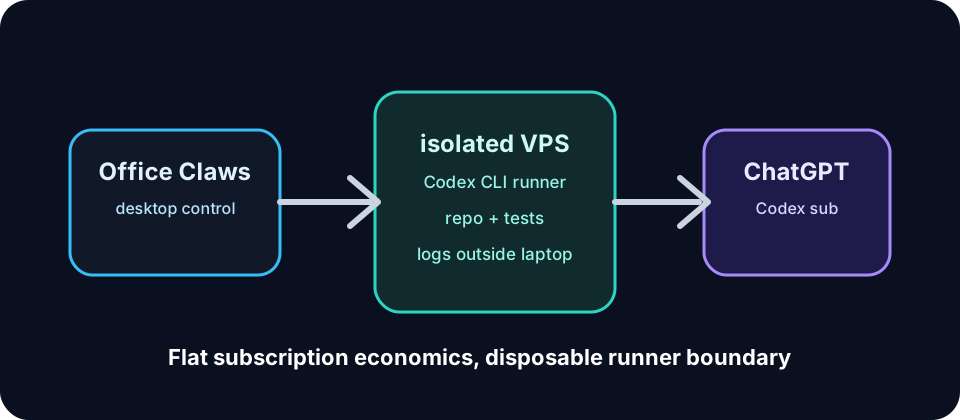
This works best when the task is repo-shaped: implement a feature, fix tests, refactor a module, write docs, or keep a branch alive while your laptop sleeps. The VPS gives you uptime and a blast-radius boundary. Codex gives you the subscription bill shape. Office Claws gives you provisioning, monitoring, and multi-agent visibility.
A migration runbook
- Export a list of your current OpenClaw workflows.
- Mark each one as ecosystem-specific or repo-centered.
- Keep ecosystem-specific workflows on OpenClaw API with strict budgets.
- Move repo-centered workflows to Codex on an isolated VPS.
- Compare real cost and completion quality for two weeks before deleting the old path.
Read the OpenClaw vs Codex comparison before moving the first serious repo. If the economics are the blocker, also read the OpenClaw cost comparison. When you are ready to try the Codex route, Office Claws pricing shows the self-hosted option for running agents on your own VPS.
The practical recommendation
Do not frame this as loyalty to a framework. Frame it as workload routing. OpenClaw remains useful where its ecosystem is the product. Codex is often the better fallback for long coding sessions after Anthropic subscription access disappears. The safe answer is to keep both paths for a short transition, measure them, and let the bill and branch quality decide.