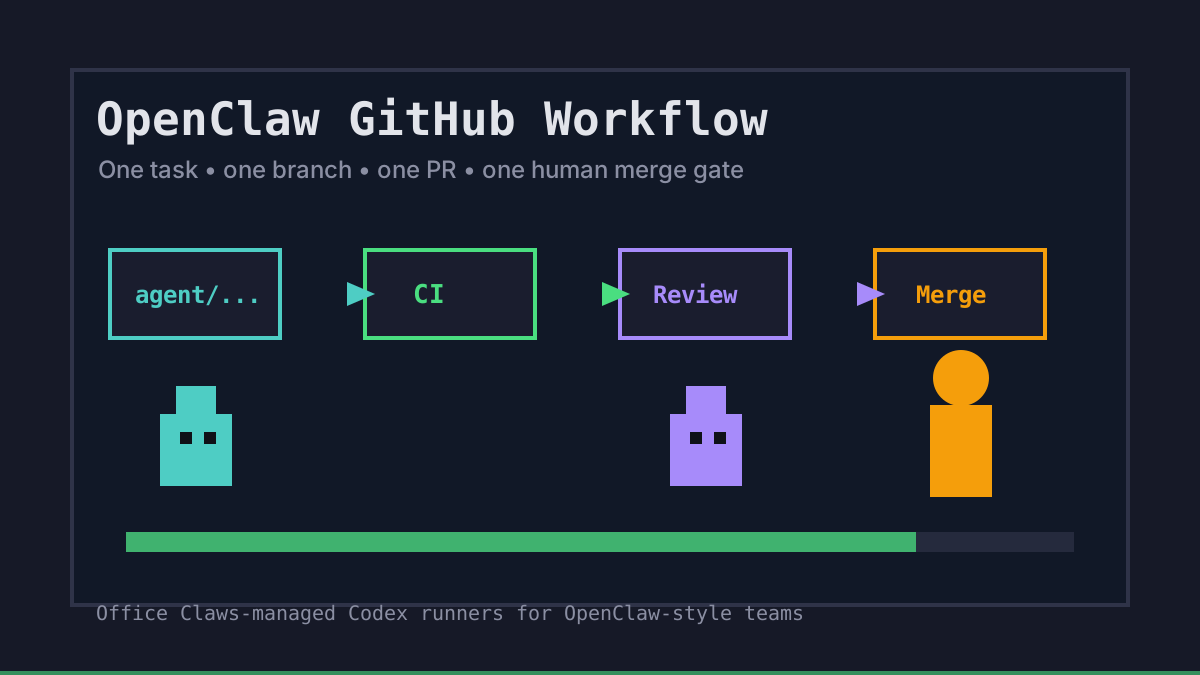
Why OpenClaw Needs a GitHub Workflow
OpenClaw-style agents are useful because they keep working after the first prompt. That same strength makes GitHub discipline non-negotiable: one agent can edit dozens of files, another can fix tests, and a third can review the diff. Without a branch and pull request pattern, the team gets a pile of changes with no clear owner.
Office Claws is not a native OpenClaw runtime. We use the same operating lesson for Codex-backed agents: one task gets one runner, one branch, one log stream, and one reviewable PR. If you are comparing runtimes, start with OpenClaw vs Codex, then use the workflow below as the safe GitHub layer around either setup.
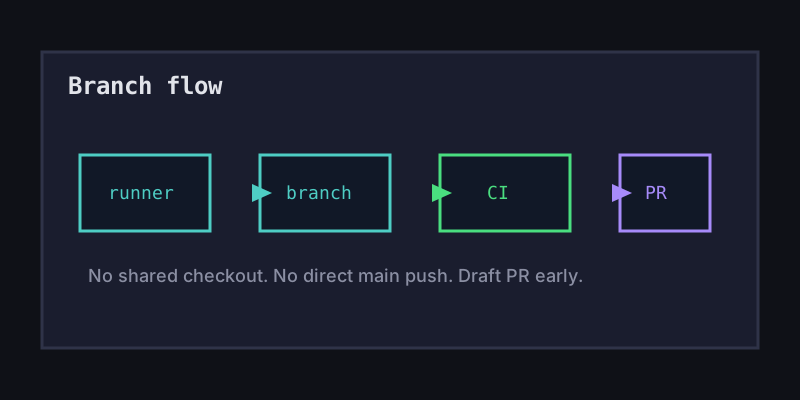
The OpenClaw Branch Pattern
Give every agent a branch before it writes code. The branch name should tell reviewers what happened without opening the PR. We like this shape:
agent/<ticket-or-topic>-<short-purpose>
fix/<bug>-agent
docs/<topic>-agent
A small amount of naming discipline prevents two common failures: agents pushing to main, and humans losing track of which runner owns which diff. In Office Claws, the desktop view maps a task to its runner and log stream; the GitHub branch is the matching source-control handle.
| Step | Owner | Gate | Failure mode it avoids |
|---|---|---|---|
| Create branch | Human or dispatcher | Branch name includes task | Agent edits main |
| Run agent | Isolated runner | One worktree per task | Cross-agent file collisions |
| Push draft PR | Agent | CI starts immediately | Hidden local-only changes |
| Review diff | Human or reviewer agent | Required approval | Silent architecture drift |
| Merge | Human | Green CI | Broken production branch |
The useful rule is simple: an agent may propose code, but it does not get to make the final integration decision.
CI Gates Before Agent Review
Run the boring checks before asking another agent to review the work. A reviewer agent is much better at architecture, edge cases, and missing tests when it is not wasting context on a TypeScript formatting failure.
A minimal GitHub Actions gate for an OpenClaw-adjacent web repo looks like this:
name: agent-pr
on:
  pull_request:
    branches: [main]
jobs:
  validate:
    runs-on: ubuntu-latest
    steps:
      - uses: actions/checkout@v4
      - uses: actions/setup-node@v4
        with:
          node-version: 22
          cache: npm
      - run: npm ci
      - run: npm run lint --if-present
      - run: npm test --if-present
      - run: npm run build
For Office Claws users, this is where the desktop manager pays off: keep the coding agent on a VPS, keep provider keys local, and let GitHub become the neutral place where humans inspect the final diff. See Office Claws for OpenClaw users for the management layer, and OpenClaw on VPS for the runner architecture.
Safe Handoffs Between Agents
The handoff should be explicit. Do not tell a reviewer agent to “check the repo.” Tell it which PR, which tests passed, what changed, and what risk you want reviewed.
Review PR #42 on branch agent/billing-export.
CI is green. Focus on data-loss risk, auth boundaries, and migration rollback.
Do not push unless you create a separate reviewer branch.
Return: blocking issues, non-blocking suggestions, and merge recommendation.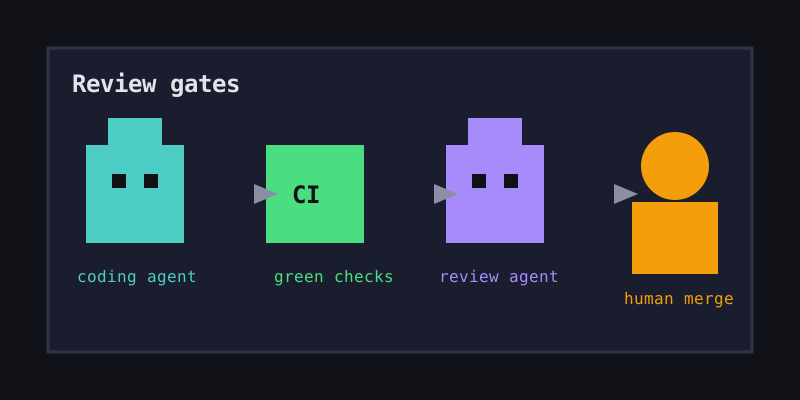
Keep the permissions equally explicit:
- Coding agents can push only to their own branches.
- Reviewer agents can comment, not merge.
- Release tokens are not present on agent runners.
- Humans keep the final merge button.
That model fits OpenClaw, Codex, or any future agent runtime. The important part is not the brand of the agent; it is the review boundary around the code it writes.
Recommended Workflow
- Start every task from a fresh branch and isolated worktree.
- Let the agent push a draft PR early, even before the work is complete.
- Require CI before reviewer-agent feedback.
- Keep provider keys and release credentials outside the runner.
- Merge only after a human reads the PR summary, test output, and risky files.
If you are moving from ad-hoc OpenClaw sessions to something a team can trust, this GitHub workflow is the first habit to install. Office Claws gives OpenClaw-style teams the desktop management, VPS runner isolation, Codex-backed execution, and safer local key handling that make those habits easier to keep.
Related Reading
- OpenClaw vs Codex — where each runtime fits.
- OpenClaw Desktop Manager — the Office Claws management layer for OpenClaw-style work.
- OpenClaw Security Best Practices — key handling, runner isolation, and audit logs.