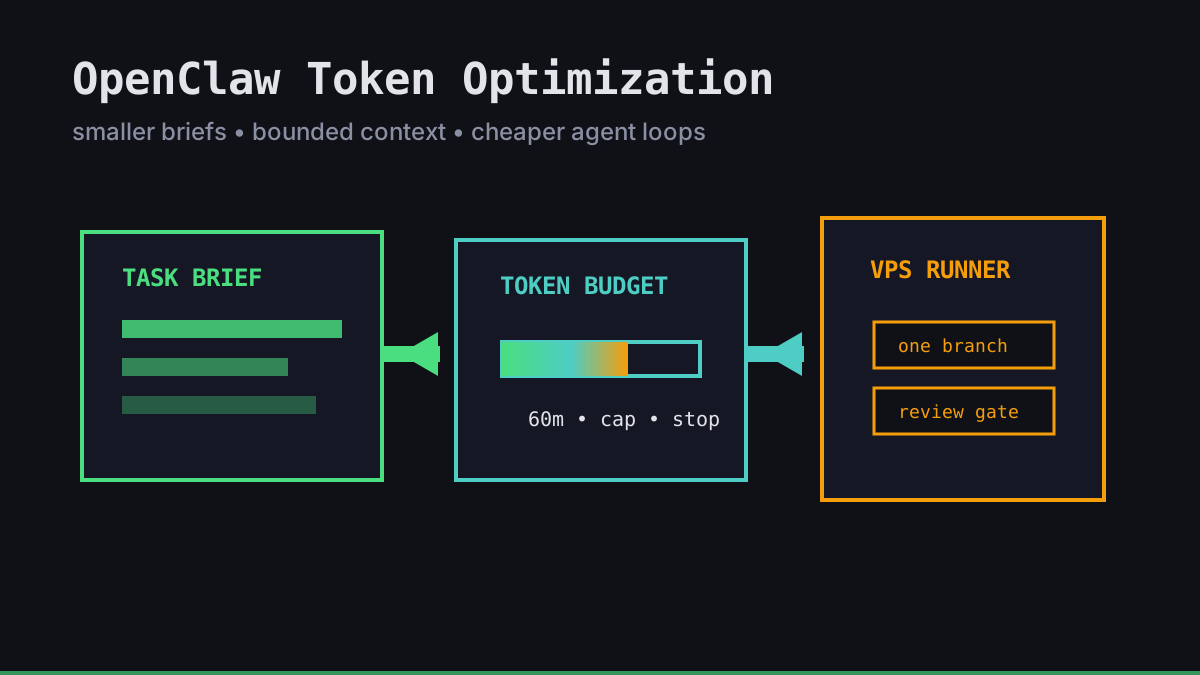
Why OpenClaw Token Optimization Matters
OpenClaw-style workflows can turn one developer into several parallel coding agents, but every extra context window has a cost. Token optimization is not about starving the model. It is about giving each agent the smallest useful brief, the right files, and a clear stop condition before it burns through history that nobody will review.
Office Claws is not a native OpenClaw runtime. The practical pattern we support is OpenClaw-adjacent operations: a local desktop manager, isolated VPS runners, and Codex-backed agents when that is the honest execution path. If you are still comparing runtimes, start with OpenClaw vs Codex, then use this guide to keep the operating cost sane.
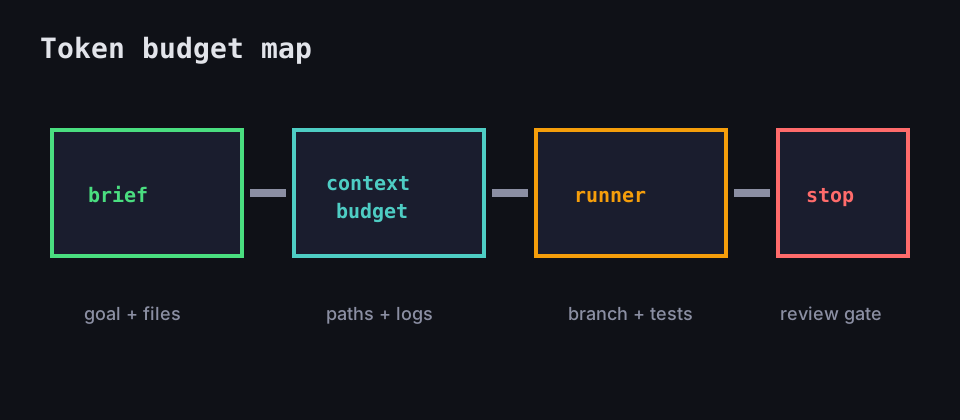
The OpenClaw Token Budget Model
Give every agent run a budget before launch. A useful budget has four parts: the task brief, the allowed context, the model tier, and the stop gate.
| Budget item | What to define | Default rule |
|---|---|---|
| Task brief | Goal, files, acceptance test | One screen of text, not a transcript dump |
| Context window | Docs, diffs, logs, and examples | Attach only what changes the next decision |
| Model tier | Fast model, strong model, or escalation | Start cheaper; escalate only on blocked reasoning |
| Stop gate | Time, failing test count, or review state | Stop before the branch becomes unreviewable |
This is where Office Claws for OpenClaw users helps: each runner can start with an owner, branch, budget, and log stream instead of inheriting a messy terminal history.
A Practical Context Diet
Most waste comes from giving the agent too much stale context. Instead of pasting the whole repo story, send a compact brief and let the runner inspect the tree.
task=openclaw-token-optimization
objective=reduce signup flow retries
allowed_paths=website/src/app, website/content/docs
acceptance=npm run build && targeted unit tests
budget=60m, medium model, escalate once only
stop_if=diff over 600 lines or same test fails 3 times
The agent still has room to explore, but the work is bounded. Pair this with OpenClaw monitoring so a stuck runner is stopped early, not discovered after a long expensive session.
Token Optimization Tactics That Actually Work
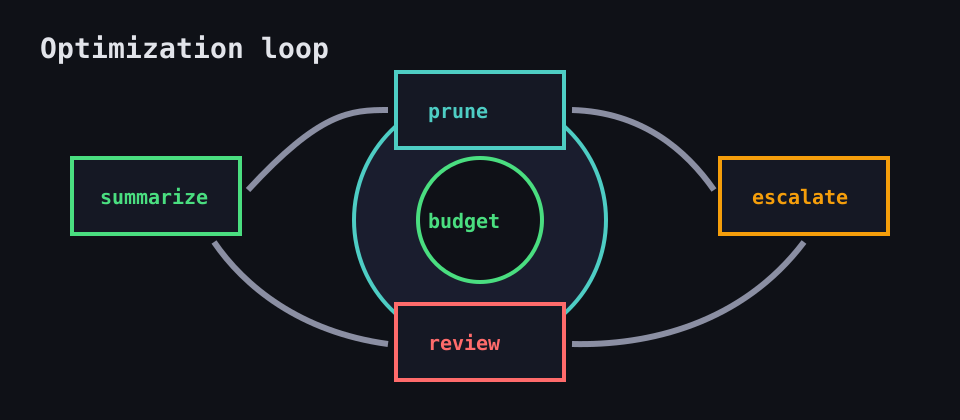
Use these tactics before buying more compute or increasing limits:
- Summarize before handoff. Replace long chat history with a current state, changed files, failing commands, and next decision.
- Prefer file paths over pasted files. Let the runner read the exact files it needs, then summarize what it found.
- Split review-heavy tasks. If the diff is huge, the real cost is human review, not just tokens.
- Escalate deliberately. Use a stronger model for architecture or debugging deadlocks, then return to a cheaper model for mechanical edits.
- Cache repeat context. Keep setup notes, project conventions, and known failure modes in docs instead of repasting them into every run.
For the broader cost model, see OpenClaw cost comparison. Token discipline works best when it is paired with VPS isolation, branch budgets, and local key handling.
Recommended Office Claws Setup
A good OpenClaw token optimization setup is boring: one task, one runner, one branch, one budget, one review gate. Start with defaults and make exceptions visible.
- Create a short task brief before launching the runner.
- Attach only the relevant docs, paths, and latest failure output.
- Set a time and spend limit for every Codex-backed agent.
- Stop or summarize before handing work to another agent.
- Review cost by branch, not only by provider invoice.
OpenClaw token optimization is really workflow optimization. Office Claws gives OpenClaw-style teams the desktop control, VPS runner visibility, Codex-backed execution, and safer local key handling needed to spend less without making agents blind.
Related Reading
- OpenClaw vs Codex — compare runtime tradeoffs.
- OpenClaw Desktop Manager — manage OpenClaw-style runners locally.
- OpenClaw Monitoring