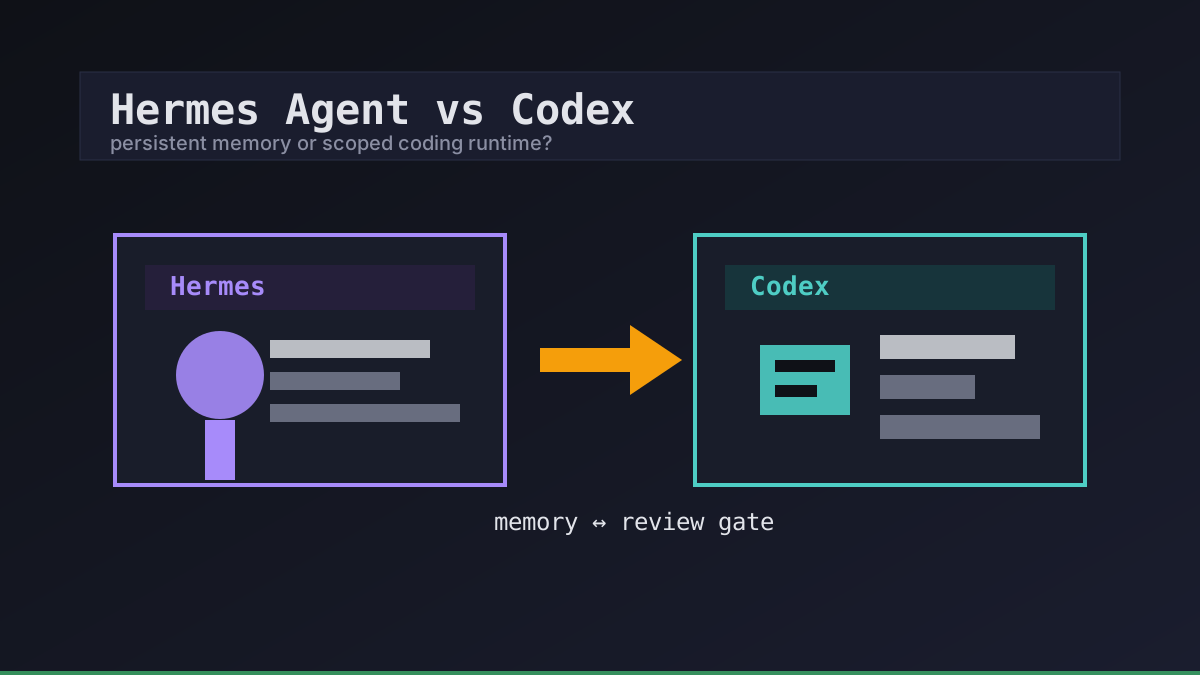
Hermes Agent vs Codex Is Really a Control Question
Searching for Hermes Agent vs Codex usually means the tool names are hiding a deeper decision: do you want a persistent autonomous system that learns across sessions, or a coding runtime you can scope to one repository, one task, and one review gate?
Hermes Agent, from Nous Research, is positioned around memory, autonomous skill creation, messaging gateways, cron scheduling, subagents, MCP, and multiple terminal backends. Codex is the practical execution path many OpenClaw users reach for when they need a coding agent that can work in a branch and stop at review. Office Claws is separate from Hermes and OpenClaw; its role is to operate Codex-backed desktop and VPS runners with visible logs, cost boundaries, and safer handoff points.
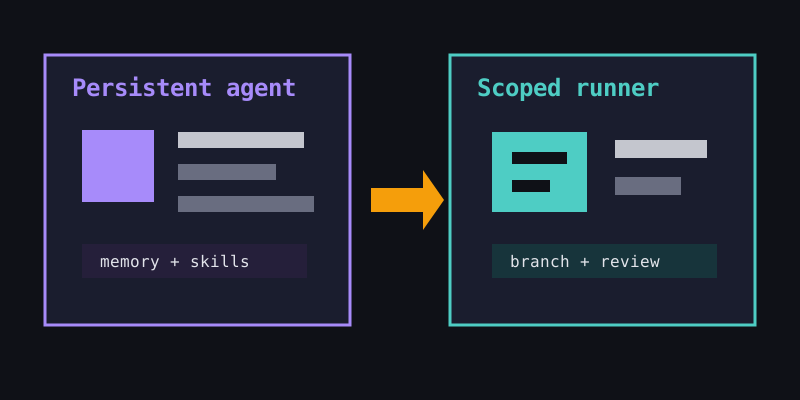
Comparison Table for OpenClaw Users
| Decision area | Hermes Agent | Codex-backed runner | Office Claws fit |
|---|---|---|---|
| Primary bet | Persistent agent behavior, memory, and skills | Scoped coding execution inside a repo | Operate the runner, branch, logs, and review gate |
| Runtime location | Check current Hermes docs for local, container, SSH, and hosted backend options | Local shell, VPS, or other configured terminal | Desktop plus VPS management for repeatable tasks |
| Memory model | Memory is part of the product story | Usually prompt, repo, and task context | Keep operational state without claiming autonomous memory import |
| Skill/plugin surface | Skills can become durable behavior | Scripts and prompts stay closer to the repo | Review reusable automation before it affects production |
| Scheduling | Built-in cron-style autonomy is a key evaluation point | External scheduler, CI, or chat-triggered runs | Scheduled tasks with owner context and audit trails |
| Messaging | Broad gateway-style operation deserves careful scoping | Usually narrower chat or CLI entry points | Route work into branches, not invisible shell sessions |
| Security concern | Memory privacy, gateway exposure, backend authority | Shell permissions, tokens, repo scope | Scoped tokens, isolated workdirs, disposable VPS runners |
| Best use | Researching durable autonomous assistants | Shipping code changes through normal review | Running OpenClaw-adjacent workflows safely |
The short version: Hermes asks how much an agent should remember and evolve. Codex asks how safely a coding task can be executed. Office Claws for OpenClaw users sits on the operations side: provisioning, observing, limiting, and reviewing that work.
Choose Hermes When Memory Is the Product
Hermes is worth evaluating when persistent behavior is the point. If you want an agent that can retain context across sessions, create or improve skills, respond through messaging surfaces, and choose among terminal backends, you are testing a wider autonomous system rather than just a coding worker.
That wider system needs wider due diligence. Before using it on serious code, ask:
- What enters memory, and how is it deleted or audited?
- Which chat messages can trigger commands?
- Where do generated skills live, and who reviews them?
- Which backend has access to secrets, SSH keys, and repositories?
- Can a failed task be reconstructed without leaking private context?
Those questions are not hostile. They are the normal checklist for any agent that persists beyond a single branch.
Choose Codex When Reviewable Code Is the Product
Codex-backed workflows are narrower by design. That is often a feature. A useful coding agent can clone or open a repo, make a branch, run tests, produce a diff, and stop before merge. Teams comparing tools after an OpenClaw migration often care less about a grand memory layer and more about whether the task produced a clean pull request.
If you are coming from OpenClaw research, pair this article with OpenClaw vs Codex and OpenClaw desktop manager. The operational question is not only which model writes code. It is whether every task has a visible owner, runner, branch, log stream, and rollback path.
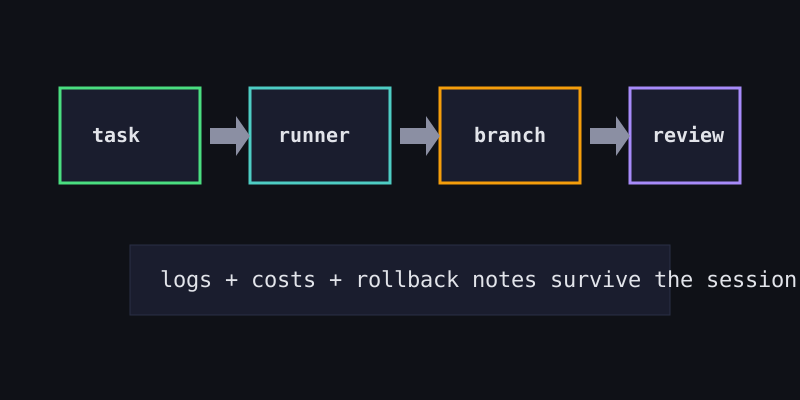
A Safe Evaluation Plan
Use the same harness for both tools so the comparison is fair:
1. pick one low-risk repository
2. create an isolated branch and runner
3. scope tokens before the first task
4. keep secrets out of prompts and memory
5. require a human merge gate
6. archive logs, cost notes, and rollback commands
Then measure outcomes instead of vibes: diff quality, test pass rate, token/API cost, setup time, recovery from stuck tasks, and how easily a reviewer can understand what happened.
For production work, we prefer the boring operating model: one task per workdir, one branch per outcome, logs that survive the session, and a human deciding what merges. Hermes may be the more ambitious autonomy experiment. Codex-backed runners are usually the more direct path to reviewable code.
Recommendation
Pick Hermes Agent if your main experiment is persistent memory, skill growth, and broad autonomous operation. Pick Codex-backed runners if your main job is producing scoped code changes with predictable review. Pick Office Claws when you want the Codex path to feel less like a loose terminal and more like an operations layer for OpenClaw-adjacent work: isolated runners, visible progress, cost notes, and deliberate merge gates.
Sources and Related Reading
- Hermes Agent documentation: https://hermes-agent.nousresearch.com/docs/
- NousResearch/hermes-agent on GitHub: https://github.com/NousResearch/hermes-agent
- OpenClaw vs Codex
- Hermes Agent vs OpenClaw
- Hermes Agent OpenClaw Migration
- OpenClaw Desktop Manager