Why OpenClaw Long-Running Tasks Need an Operating Model
OpenClaw-style agents are most useful when the work is too large for one terminal sitting: dependency upgrades, refactors, test repair, documentation sweeps, or multi-repo migration chores. The risk is that a long-running task can silently drift. It may keep spending tokens, edit unrelated files, wait for a secret, or finish locally without leaving evidence a reviewer can trust.
Office Claws is not a native OpenClaw runtime. The safe framing is operational: use Office Claws as the desktop and VPS manager around OpenClaw-adjacent workflows, usually with Codex-backed agents as the practical execution path. If you are still choosing the runtime, read OpenClaw vs Codex, then design the long-task loop before you launch expensive work.
The OpenClaw Long-Running Task Loop
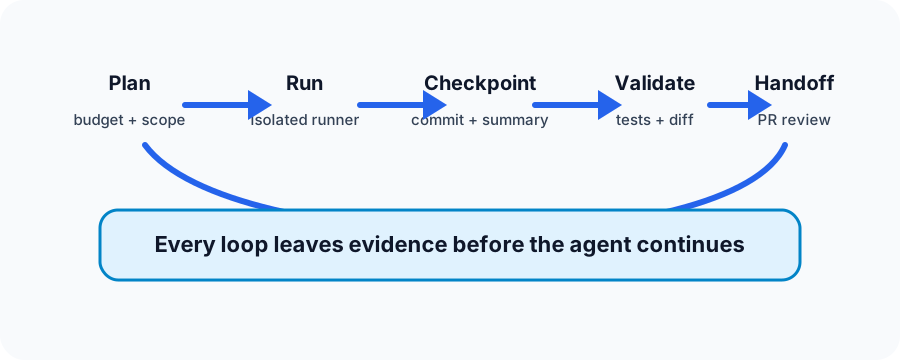
A durable task should move through a visible loop: plan, run, checkpoint, validate, and hand off. The loop is simple enough for a solo developer and strict enough for a team.
| Stage | Evidence to keep | Stop condition |
|---|---|---|
| Plan | goal, repo, branch, budget, files in scope | unclear owner or risky permissions |
| Run | runner id, logs, current command, heartbeat | no progress or repeated retries |
| Checkpoint | commit, diff summary, open questions | unrelated files changed |
| Validate | tests, build, lint, CI status | local-only success with no CI proof |
| Handoff | PR, summary, screenshots or logs | reviewer cannot reproduce result |
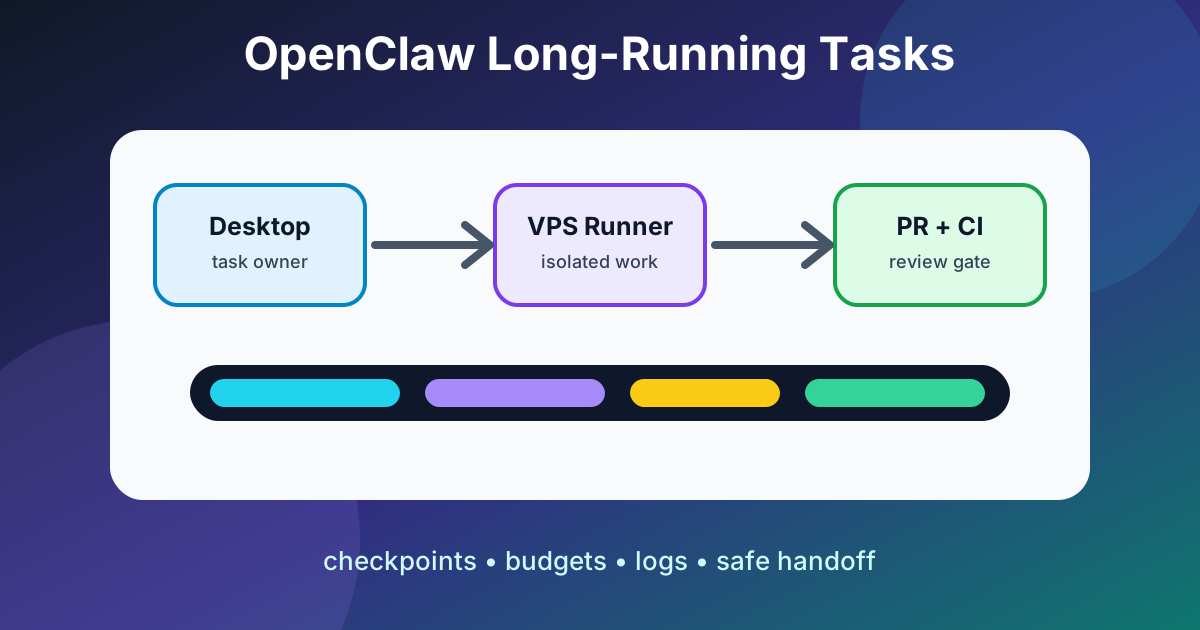
This is the same pattern behind an OpenClaw desktop manager: one task, one runner, one branch, one log stream. Office Claws for OpenClaw users makes that state visible without asking you to babysit a hidden tmux pane.
Budgets Before Autonomy
Long-running does not mean unbounded. Put budgets in writing before the task starts:
- Runtime budget: for example, 45 minutes before a required checkpoint.
- Token or API budget: cap spend before the agent explores too far.
- Diff budget: name the directories the agent may touch.
- Risk budget: mark secrets, deploy files, migrations, billing, and auth as review-required.
- Retry budget: after two identical failures, summarize instead of looping.
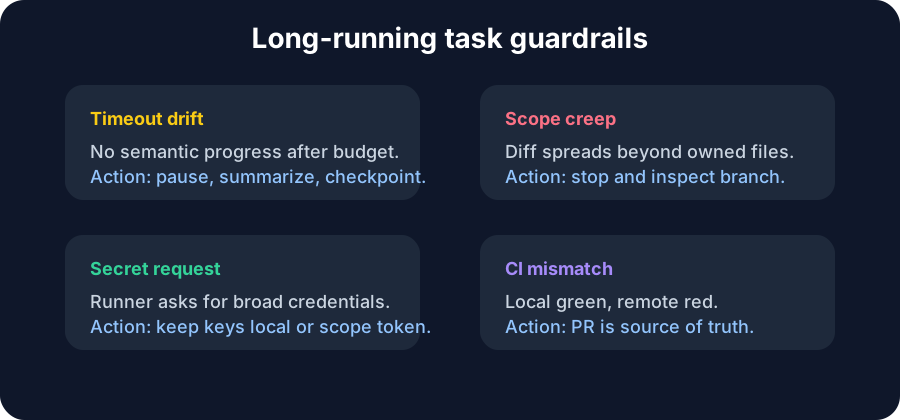
Budgets turn autonomy into a contract. The agent can keep working, but only while it leaves useful evidence and respects the blast radius. For the infrastructure side, pair this with OpenClaw monitoring and isolated runners from the OpenClaw on VPS architecture.
A Safe Runner Contract
Use this contract for every long task launched from Office Claws:
task: upgrade-test-runner
runtime_budget_minutes: 45
runner: vps-fra-02
branch: agent/upgrade-test-runner
allowed_paths:
  - website/
  - package.json
  - package-lock.json
checkpoint_required: true
must_not_touch:
  - .env
  - deploy/
  - billing/
validation:
  - npx velite build
  - npm run build
The exact fields are less important than the habit. A long-running agent should know where to work, when to stop, and what validation proves success. Keep broad credentials local whenever possible; OpenClaw secrets management explains how to avoid dumping powerful tokens into remote runners.
Handoff Rules for OpenClaw-Style Work
The handoff is where long-running tasks either become leverage or become cleanup. Require the agent to provide:
- A short summary of what changed and why.
- The branch name and latest commit.
- Validation commands and results.
- Known risks, skipped work, or follow-up questions.
- Links to logs, screenshots, or CI when relevant.
For teams, the PR is the durable handoff. For solo developers, a branch plus a concise final note is enough. In both cases, avoid merging directly from the runner. Let CI and human review be the gate.
Recommended Office Claws Setup
For long-running OpenClaw-adjacent work, configure Office Claws around this baseline:
- Launch each task on a separate runner or worktree.
- Stream logs and heartbeats back to the desktop.
- Set runtime, token, and diff budgets before execution.
- Force checkpoints before crossing risky boundaries.
- Push branches early so CI can see the same state reviewers see.
- Keep release credentials and broad provider keys outside the runner.
Office Claws helps by turning long-running agents into managed operations: desktop control, VPS runner visibility, Codex-backed execution, safer local key handling, and reviewable branches. That is the honest value for OpenClaw users: not pretending to be OpenClaw, but making autonomous coding work safer to run for hours.
Related Reading
- OpenClaw vs Codex — choose the runtime and operating model.
- Office Claws for OpenClaw users — desktop control for agent work.
- OpenClaw monitoring — logs, health checks, and stuck-agent recovery.