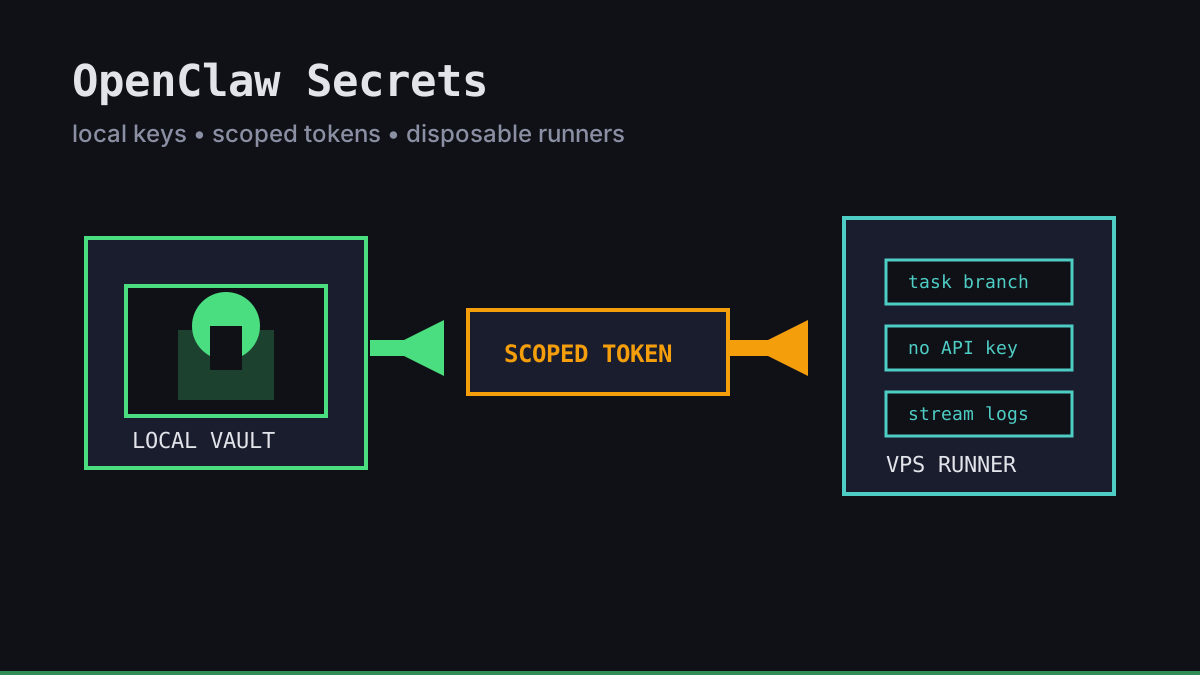
Why OpenClaw Secrets Management Matters
OpenClaw-style agents are useful because they can run commands, edit code, open branches, and keep working after you leave the terminal. Those same permissions make secrets management the first thing to get right. A leaked provider key is metered money. A leaked GitHub token is repository access. A leaked deploy key can become production access.
Office Claws is not a native OpenClaw runtime. The safe pattern still translates directly: keep provider keys and release credentials on the operator machine, run the agent on an isolated VPS or worktree, and pass only the narrow credential needed for the current step. If you are choosing the runtime layer, start with OpenClaw vs Codex; this guide covers the operating model around it.
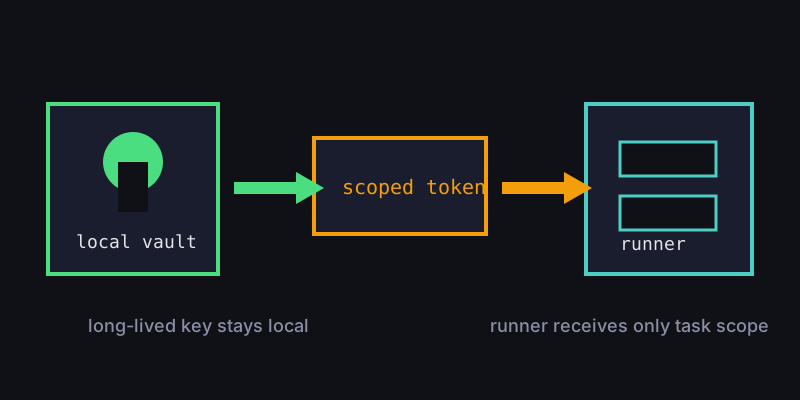
The OpenClaw Secrets Model
A practical secrets model has three zones: the local vault, the runner, and the external service. The local vault is where long-lived API keys live. The runner is where untrusted or semi-trusted agent work happens. The external service is GitHub, OpenAI, Anthropic, a package registry, or production infrastructure.
| Secret type | Keep where | Expose to runner? | Safer pattern |
|---|---|---|---|
| Provider API key | Local OS keychain or Office Claws desktop store | Only through a brokered call | Spend cap, per-provider key, rotation calendar |
| GitHub token | Local machine or CI secret store | Yes, but scoped | Repo-only token, short expiry, branch permissions |
| Deploy key | CI/CD platform | Avoid | Let CI deploy after PR review |
.env values | Secret manager | Only for test fixtures | Redacted sample file plus local injection |
| SSH private key | Local keychain | Avoid copying | Tailscale/SSH agent forwarding with limits |
This is the same reason OpenClaw security best practices and OpenClaw monitoring keep coming back to isolation: secrets are only manageable when the runner cannot read every credential by default.
A Safer OpenClaw Runner Pattern
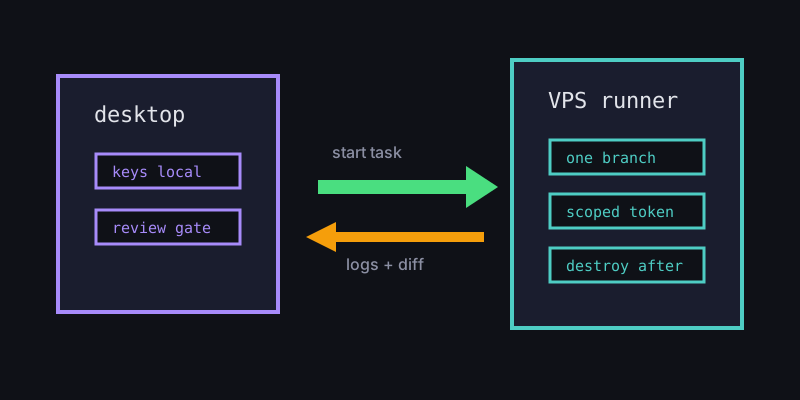
The runner should be disposable. It can hold source code, logs, dependency caches, and temporary credentials for the task. It should not hold the keys that unlock every future task. Office Claws for OpenClaw users uses the desktop as the operator layer and VPS runners as workspaces, usually with Codex-backed execution where that is the practical path.
operator laptop
  ├─ provider keys in local store
  ├─ GitHub token minting / approval
  └─ Office Claws desktop control
        │
        ▼ encrypted tunnel
VPS runner
  ├─ one task / branch / worktree
  ├─ scoped token for current repo
  ├─ no long-lived provider key on disk
  └─ logs streamed back to operator
That pattern also makes incident response boring. If a package install, prompt injection, or extension goes wrong, you revoke one scoped token, destroy one runner, and keep the operator vault intact. For the runner side, see OpenClaw on VPS and the OpenClaw desktop manager page.
Rotation and Review Checklist
Secrets management fails when it becomes a once-a-year cleanup. Make it part of the workflow:
- Create a separate provider key for agent work, with a daily or monthly spend cap.
- Use repo-scoped GitHub tokens, not organization-wide personal tokens.
- Prefer PR-based deploys so production credentials stay in CI.
- Redact logs before sharing agent transcripts.
- Rotate any token pasted into a runner after the task completes.
- Delete stale
.envfiles from old branches and snapshots.
A useful review gate is simple: if the agent can finish the task without seeing a long-lived secret, it should not see that secret.
What Office Claws Does Differently
Office Claws keeps the human-facing control plane local and treats remote machines as replaceable workers. That gives OpenClaw-adjacent teams a practical compromise: desktop management, VPS runner provisioning, log visibility, and safer local key handling, without pretending every agent needs the same trust level.
The important disclosure is that Office Claws is Codex-first today. We use OpenClaw demand and OpenClaw operating lessons to explain the problem, then give users a concrete Codex-backed path when subscriptions, costs, or security controls make that the better runtime.
Recommendations
Start with the highest-risk secret, not the fanciest vault. Move provider keys out of project .env files. Give agents repo-scoped tokens. Keep deploy credentials in CI. Run long tasks on isolated VPS runners. Monitor the branch, logs, and token spend.
Good secrets management is not about trusting agents less; it is about trusting boundaries more. When the boundary is clear, OpenClaw-style work becomes easier to review, cheaper to recover, and safer to scale.
Related Reading
- OpenClaw vs Codex — compare runtime and operating models.
- Office Claws for OpenClaw users — desktop management for local and VPS agent work.
- OpenClaw Security Best Practices — threat model, isolation, and audit logs.