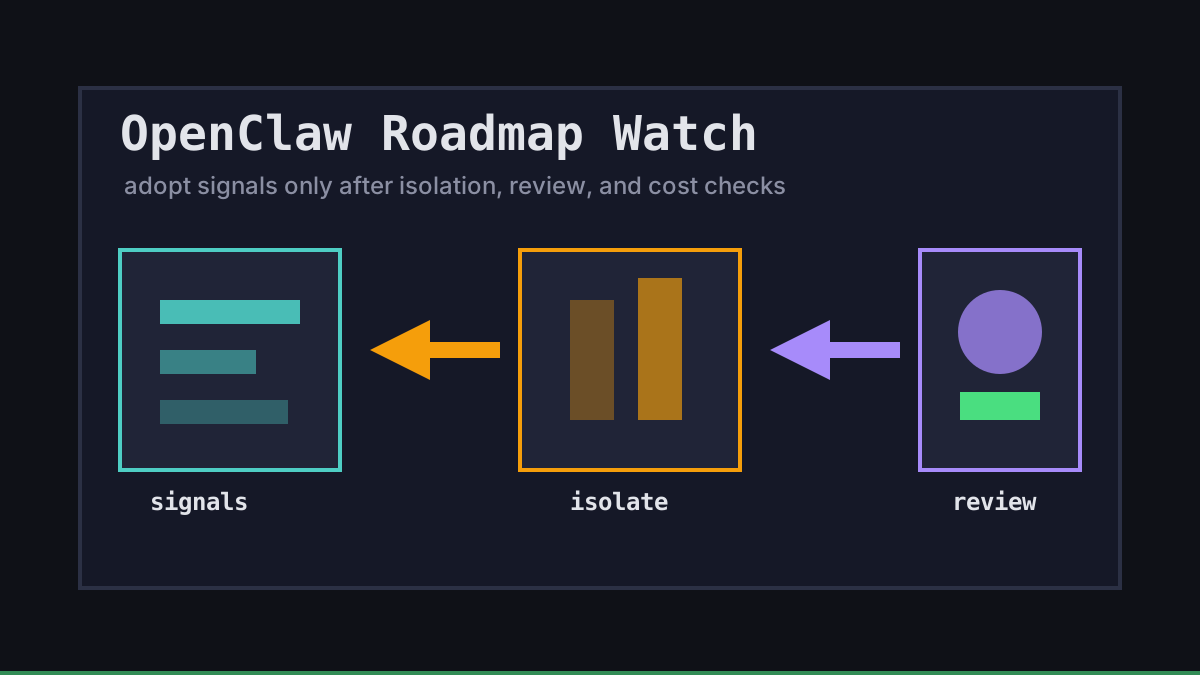
OpenClaw moves quickly, and that is exactly why teams should not rebuild their agent stack every time a new runtime, extension, or migration story appears. The safer habit is a roadmap watch: track signals, test in isolation, and only move production coding work when the operational model is clear.
This guide is the watchlist we use for OpenClaw-adjacent workflows. It is not a promise that Office Claws runs OpenClaw natively. Office Claws is Codex-first; the fit is managing the durable coding slice with local control, VPS runners, branch isolation, and review gates.
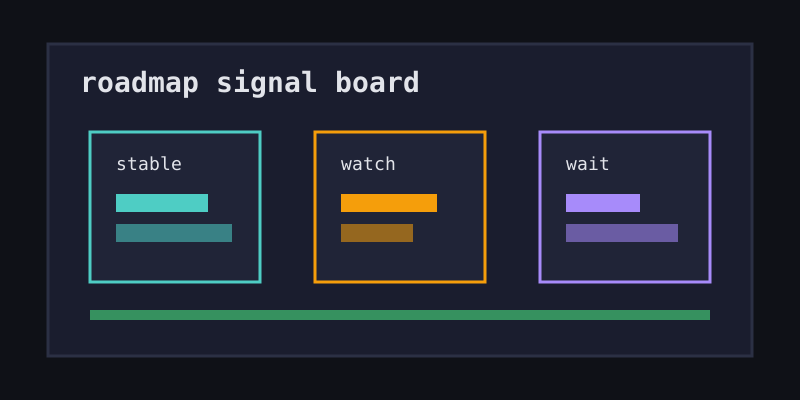
Track Roadmap Signals, Not Hype
A useful OpenClaw roadmap watch separates product signals from noise. We care less about a launch headline and more about whether a team can operate the workflow safely for weeks.
| Signal | What to ask | Adopt now? |
|---|---|---|
| Runtime stability | Can a task survive restart, reconnect, and long logs? | Only after a dry run |
| Extension surface | Which tools and credentials are reachable? | Limit by workflow |
| Migration path | What state, prompts, and approvals transfer? | Test on non-critical repos |
| Cost model | Is the bill predictable across retries and parallel work? | Compare against VPS runners |
| Review gate | Can humans inspect diffs before merge or deploy? | Required |
For deeper positioning, keep the OpenClaw vs Codex comparison close. OpenClaw can be a broad workflow layer; Codex-backed runners are often the simpler place for repo-centered execution.
Use a Three-Lane Test Before Switching
We like a three-lane test because it prevents a shiny roadmap item from touching production too early.
lane 1: research task
  - no secrets
  - disposable notes
  - inspect transcript only

lane 2: code task
  - isolated branch
  - scoped token
  - tests must run before PR

lane 3: production task
  - human approval
  - deploy gate
  - rollback owner named
The first lane tells you whether the new capability is useful. The second tells you whether it behaves around a real repository. The third should stay closed until logs, permissions, and rollback are boring.
If the coding lane is the important part, the practical answer may be Office Claws for OpenClaw users: keep exploration broad, then move durable implementation to a Codex runner on a local machine or VPS.
Watch for Operational Debt
Roadmaps usually advertise capability. They rarely advertise the debt that comes with it: more credentials, more background sessions, more places for a stuck agent to hide, and more partial state after an interrupted task.
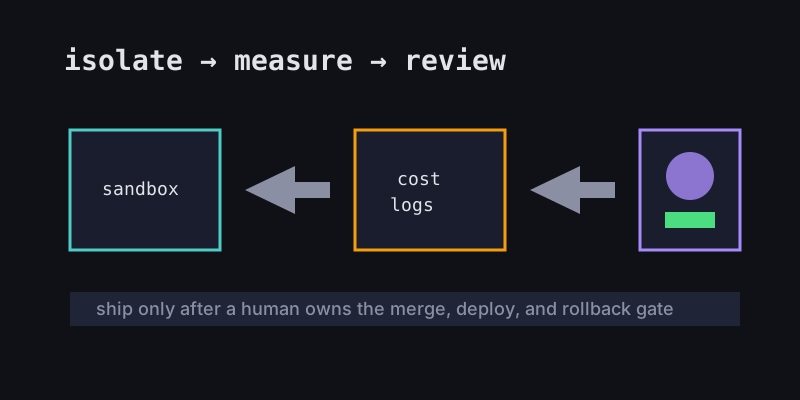
Before adopting a new OpenClaw pattern, write down the owner for each failure mode.
| Failure mode | Minimum control |
|---|---|
| Agent loops overnight | Budget cap and stop control |
| Extension touches the wrong account | Scoped credentials per workflow |
| Repo state diverges | One branch per runner |
| Secret appears in logs | Local key handling and redaction review |
| Deploy starts too early | Manual merge and deploy gate |
This is where an OpenClaw desktop manager and OpenClaw VPS manager mindset helps, even when the execution path is Codex. Treat agents like infrastructure, not tabs.
Recommendation
Keep an OpenClaw roadmap watch, but do not let it become roadmap chasing. Adopt new OpenClaw capabilities first in research lanes, then isolated repo lanes, and only later in production paths with a named human gate.
For coding work, our recommendation is deliberately conservative: use OpenClaw where broad workflow context matters, then run long-lived repo changes on isolated Codex-backed runners managed by Office Claws. That gives teams the upside of the OpenClaw conversation without turning every roadmap update into an operations rewrite.