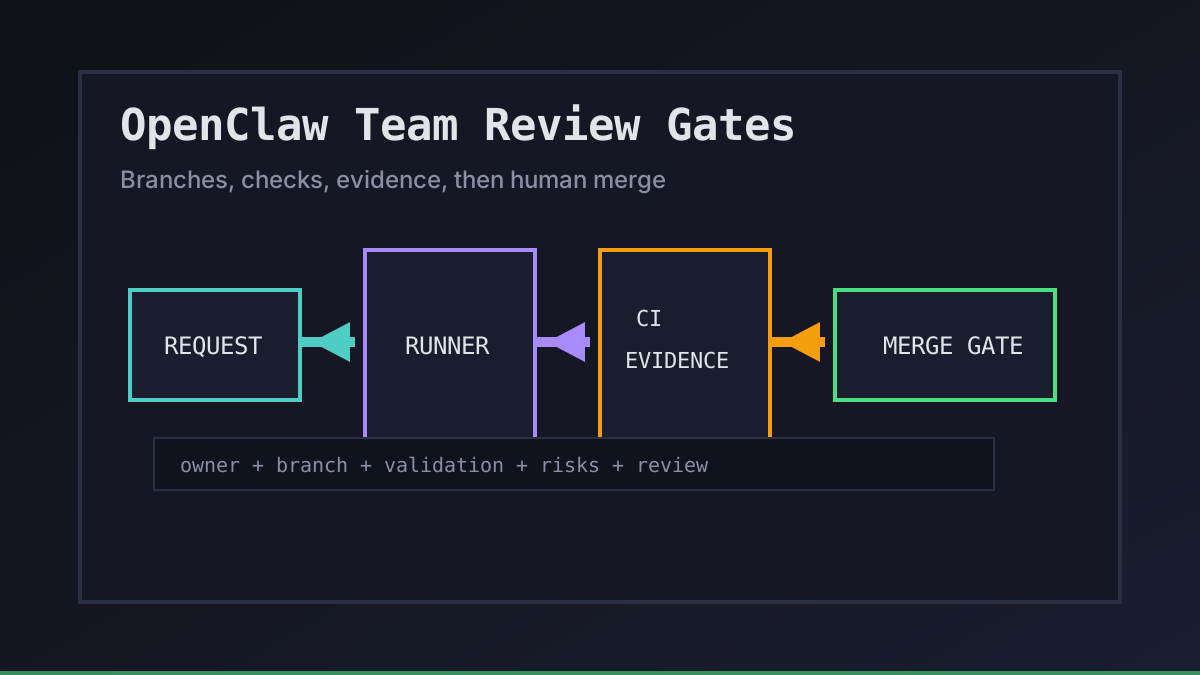
When a team starts using OpenClaw-style agents, the risky moment is not the first patch. It is the first patch that looks finished but bypasses the checks a human teammate would normally expect. We use review gates to make agent work boring, inspectable, and safe to merge.
Office Claws is not a native OpenClaw runtime. The pattern here is an operating layer for OpenClaw users who want local desktop control, VPS runners, Codex-backed execution when that is the practical path, and a clean handoff into GitHub review.
Why OpenClaw Team Workflow Needs Review Gates
A useful OpenClaw team workflow separates execution from permission. Agents can clone a repo, make a branch, run tests, and explain the diff. Humans still decide whether the change belongs in the product.
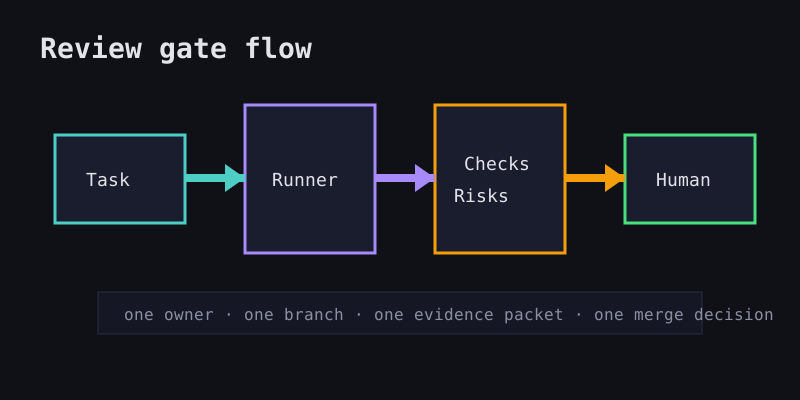
The gate is a small contract. It says what evidence the agent must produce before anyone trusts the result.
| Gate | Agent must provide | Human decides |
|---|---|---|
| Scope | touched files, skipped areas, assumptions | whether the task stayed inside the request |
| Validation | command output, failures, screenshots when relevant | whether the evidence is enough |
| Risk | secrets touched, migrations, deletes, deployment impact | whether the rollout needs extra review |
| Merge | branch, commit, PR summary | whether the code ships |
This is why we link team workflow to OpenClaw vs Codex early. Runtime choice matters, but the review model matters just as much once multiple people and agents touch the same repo.
The Minimal Gate Manifest
We prefer a short manifest over a long policy document. The manifest travels with the task and tells the agent how to finish.
task: fix-billing-empty-state
owner: product-oncall
runner: vps-codex-04
branch: agent/fix-billing-empty-state
allowed_paths:
  - website/src/app/**
  - website/content/**
required_gates:
  - npx velite build
  - npm run build
  - human_pr_review
risk_flags:
  - auth
  - billing
  - production_copy
The important part is not the exact YAML. It is the habit: one owner, one runner, one branch, one validation list, and one human merge gate. Office Claws for OpenClaw users can keep that workflow visible from the desktop while the actual runner works on a local machine or VPS.
Evidence That Belongs in Every Handoff
A good agent handoff should be readable five hours later by someone who was not watching the terminal. We ask for the same evidence each time.
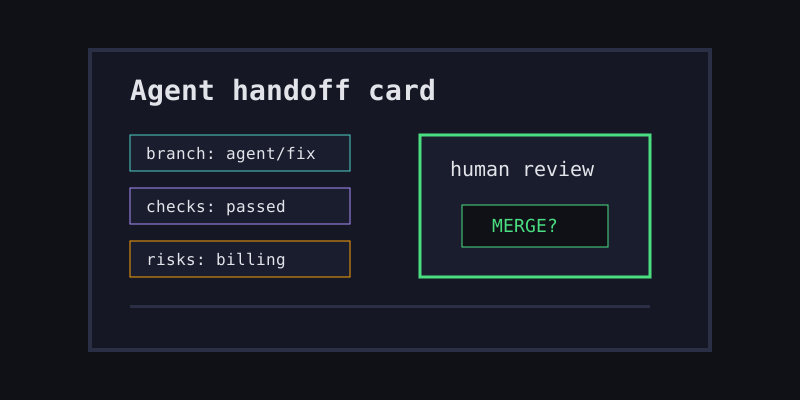
- The branch name and final commit hash.
- A short summary of changed files.
- Exact validation commands and whether they passed.
- Known risks, skipped checks, and assumptions.
- A PR or compare link for review.
This also protects the agent. If a build fails because of an existing flaky test, the handoff can say so plainly instead of hiding the failure behind a confident summary. For deeper repository patterns, see OpenClaw GitHub workflow and OpenClaw background tasks.
Where Office Claws Fits
Office Claws makes the review-gate pattern practical because the control plane is outside the runner. A team can start tasks from the desktop, assign isolated VPS runners, stream logs, keep provider keys local where possible, and stop tasks that drift.
| Need | Office Claws pattern |
|---|---|
| Visible ownership | queue each task with a human owner |
| Runner isolation | one VPS or workdir per task |
| Cost control | Codex-backed execution with explicit budgets |
| Safer secrets | avoid scattering shared .env files across shells |
| Review discipline | branch, logs, validation, then human merge |
That is the honest pitch for Office Claws for OpenClaw users: it is the desktop and VPS operations layer around autonomous coding work, not a promise that every runtime detail disappears.
Recommendations
Start small. Add review gates to one repository before trying to automate the whole engineering team.
- Require a branch for every agent task.
- Require validation output in every summary.
- Keep release credentials outside normal runners.
- Treat skipped tests as risk, not trivia.
- Let humans own merge and deployment decisions.
A team workflow is successful when agent work becomes easier to review, not harder to explain. Review gates give OpenClaw-style teams the simple rule they need: agents can move fast, but evidence gets merged.