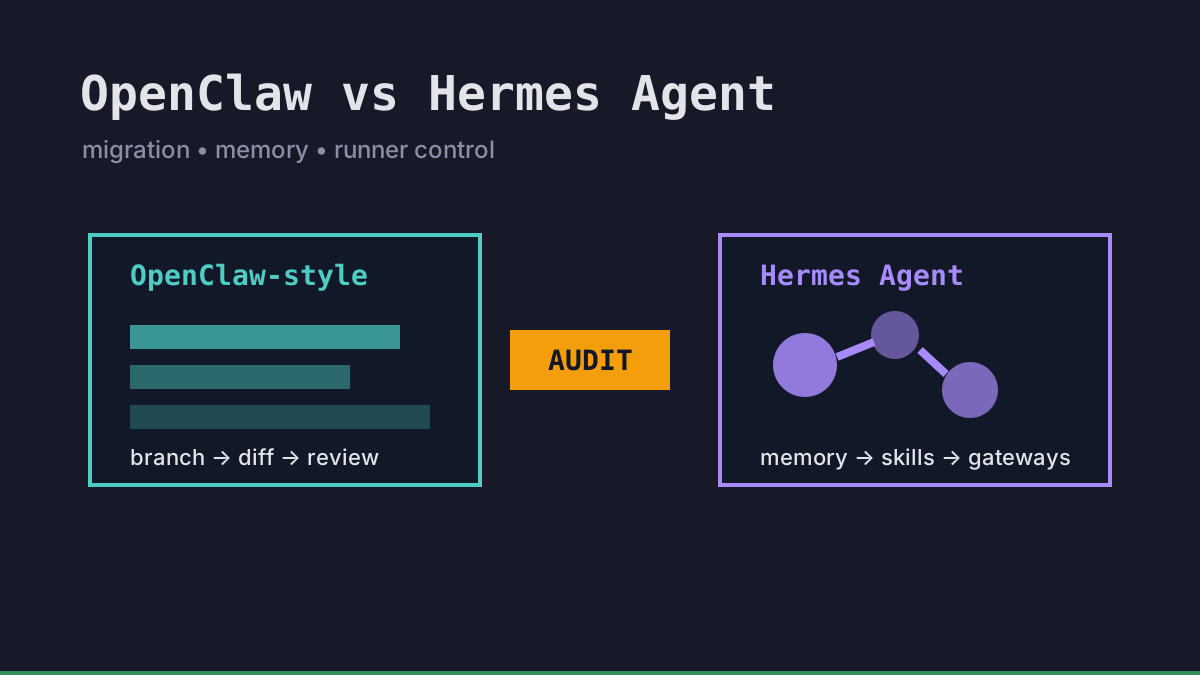
OpenClaw vs Hermes Agent Is Really an Operations Question
If you search for OpenClaw vs Hermes Agent, you probably already like autonomous coding agents. The harder question is where authority lives: in a persistent agent that learns across sessions, or in a developer workflow built around branches, logs, runners, and review gates.
Hermes Agent is a Nous Research project with persistent memory, autonomous skill creation, messaging gateways, cron scheduling, subagents, MCP, and several terminal backends. OpenClaw-style workflows usually start from a more familiar developer loop: prompt a task, watch the terminal, inspect the diff, and decide what ships. Office Claws is separate from both. Our role is the operator layer for OpenClaw-adjacent, Codex-backed work: desktop control, VPS runners, scoped branches, visible logs, and safer local key handling.
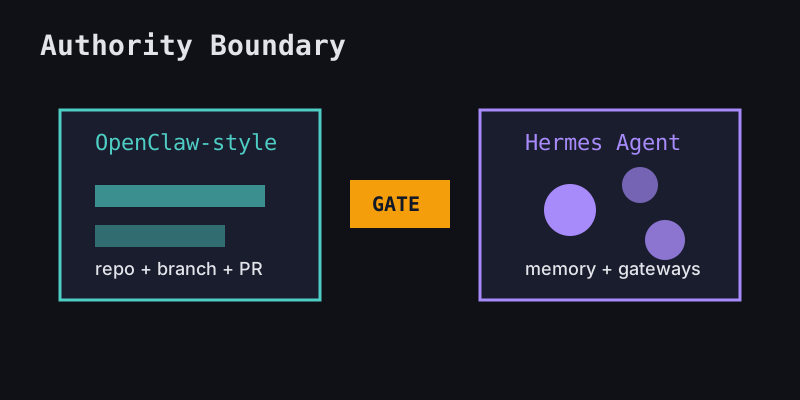
Comparison Table for OpenClaw Teams
| Area | OpenClaw-style workflow | Hermes Agent | Office Claws fit |
|---|---|---|---|
| Onboarding | Developer terminal, repo conventions, branch habit | Evaluate Nous docs, gateway setup, and backend choice | Manage runners without claiming to import either system's state |
| Runtime location | Local shell, remote box, or VPS by convention | Local, Docker, SSH, Daytona, Singularity, Modal, and documented backends | Desktop and VPS runner visibility for Codex-backed execution |
| Memory | Usually prompt files, repo notes, and task history | Persistent memory is a core product idea | Keep operational task context; do not store secrets in prompts |
| Skills/plugins | Scripts and prompts reviewed like repo artifacts | Autonomous skill creation and improvement | Treat durable skills as code that needs review |
| Scheduling | Cron, CI, chat triggers, or manual launch | Built-in cron-style scheduling | Scheduled tasks with owner context and review gates |
| Messaging | Custom bots or gateway add-ons | Broad messaging surface area | Scope chat-triggered work to one branch and one log stream |
| Migration | Preserve habits manually and re-audit permissions | Hermes materials include an OpenClaw migration path | Run migrated work through isolated Codex-backed runners |
| Security | Main risk is shell and repo authority | Main risks include memory privacy, gateway exposure, and backend permissions | Local keys, scoped tokens, disposable runners, and human merge gates |
The table is intentionally operational. A feature checklist is not enough. The production question is whether you can observe, revoke, and review the authority you grant.
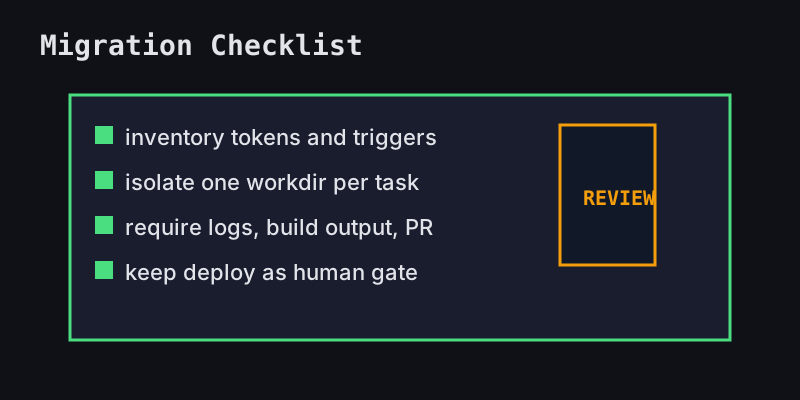
Migration Checklist Before Switching Tools
Do not migrate by copying every habit forward. Use the tool change as a chance to reduce blast radius.
1. inventory repos, tokens, cron jobs, and message triggers
2. decide which tasks may run unattended and which need approval
3. move secrets out of prompts, memory, and shared shell history
4. create one branch and one isolated workdir per task
5. require build output, changed-file summaries, and PR links
6. test with a low-risk repository before production code
7. document how to pause, revoke, or delete the runner
This is where Office Claws for OpenClaw users fits. We do not pretend Office Claws is a native OpenClaw or Hermes runtime. We make the runner layer more visible when Codex-backed execution is the practical path. For runtime tradeoffs, pair this guide with OpenClaw vs Codex and OpenClaw security best practices.
Security Questions That Should Decide the Pilot
Hermes is interesting because memory, skills, scheduling, messaging, and subagents can make an agent feel less like a one-off command and more like an ongoing teammate. That power deserves a tighter audit, not panic.
Ask these questions before giving either path real production authority:
- What memory is kept, where is it stored, and how is it deleted?
- Which messages can trigger repository or shell actions?
- Which terminal backend owns credentials and working directories?
- Are generated skills reviewed before they become durable behavior?
- Can you reconstruct a failed task without exposing secrets?
- Can a human stop the work before merge or deploy?
OpenClaw-style workflows need the same discipline. A local terminal with broad repo access can still leak secrets, overwrite work, or run expensive loops. The safer pattern is boring: scoped tokens, disposable VPS runners, logs, PRs, and a human-owned deploy gate.
Recommendation
Choose Hermes Agent when persistent memory, autonomous skill improvement, messaging gateways, and multi-backend experiments are the reason you are evaluating the tool. Choose an OpenClaw-style workflow when you want autonomous coding that still looks like normal software engineering: branch, diff, validation, review.
Choose Office Claws when the problem is not choosing a logo but operating the work safely: Codex-backed runners, local desktop control, VPS isolation, cost visibility, and review gates. Start with one low-risk task, prove the evidence trail, then expand only after the team trusts the controls.
Sources and Related Reading
- Hermes Agent documentation: https://hermes-agent.nousresearch.com/docs/
- NousResearch/hermes-agent on GitHub: https://github.com/NousResearch/hermes-agent
- Hermes Agent vs OpenClaw
- Hermes Agent OpenClaw Migration
- OpenClaw vs Codex
- OpenClaw desktop manager