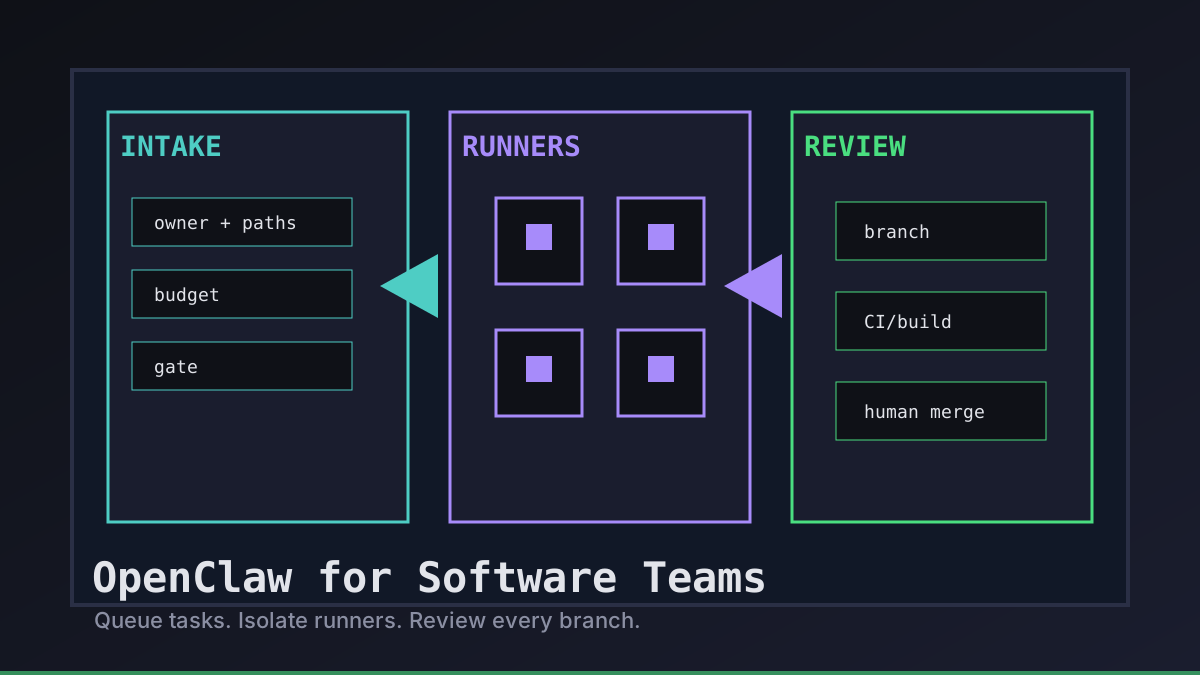
Why OpenClaw Changes Team Operations
OpenClaw-style agents make software teams faster only when the work stays observable. The win is not letting a bot roam the monorepo. The win is giving a scoped task to an isolated runner, keeping the logs visible, and turning the result into a branch a teammate can review.
Office Claws is not a native OpenClaw runtime. We use OpenClaw demand as the operating pattern and provide the desktop/VPS control layer around Codex-backed agents: queue the task, assign a runner, stream status, and keep review gates in GitHub. If you are still comparing runtimes, start with OpenClaw vs Codex, then use this article as the team model.
The Team Contract Before Any Agent Runs
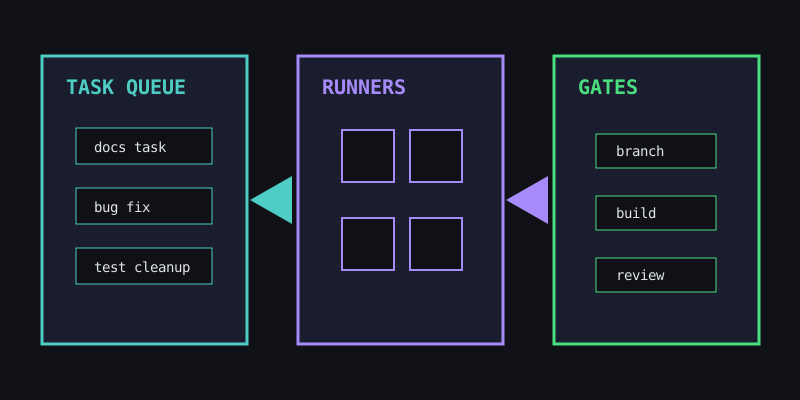
A software team should treat every agent request like a small production change. Before the agent starts, write down who owns it, what it may touch, which runner it uses, and which evidence proves it is done.
| Contract field | Team default | Why it matters |
|---|---|---|
| Owner | named engineer or on-call role | someone can answer scope questions |
| Paths | explicit folders or files | prevents useful but unrelated edits |
| Runner | one local or VPS runner per task | avoids shared checkout conflicts |
| Branch | agent/<short-task> | makes review and rollback simple |
| Budget | time box plus token posture | keeps cost from becoming invisible |
| Gate | build, tests, PR, or docs build | turns completion into evidence |
Office Claws for OpenClaw users fits this contract as the visible operations layer. The queue shows who asked for work, the runner keeps the task isolated, and the final branch gives the team a normal review surface instead of a mysterious terminal transcript. For the runner side, see OpenClaw VPS manager and OpenClaw remote runner architecture.
Lanes That Scale Without Chaos
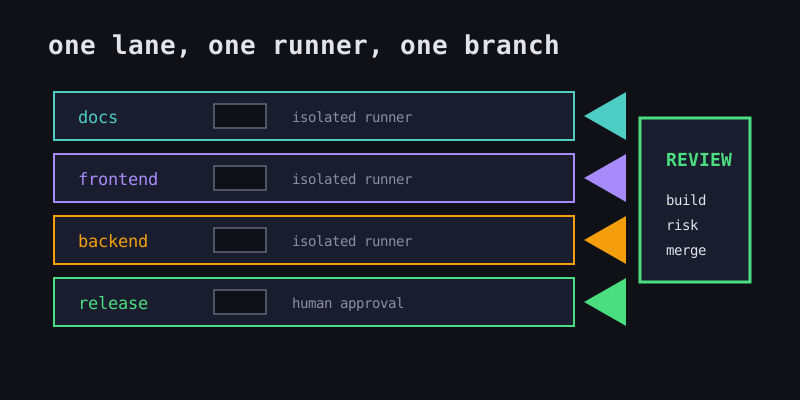
The safest pattern is not one super-agent. It is several narrow lanes with different permissions and gates. Documentation tasks can run cheaply. Frontend polish needs screenshots or builds. Backend changes need tests. Release work stays human-approved.
software_team_lanes:
  docs:
    paths: ["website/content/**", "docs/**"]
    gate: "npx velite build && npm run build"
  frontend:
    paths: ["website/src/**"]
    gate: "npm run build"
  backend:
    paths: ["backend/**", "cmd/**", "internal/**"]
    gate: "go test ./..."
  release:
    paths: ["deploy/**", ".github/workflows/**"]
    gate: "human approval before production"
Those lanes keep OpenClaw-adjacent autonomy practical. A team can run multiple agents in parallel without letting them write into the same checkout, share credentials, or silently bypass the review process.
Review Gates for Shared Repositories
The shared repo is where agent work becomes real. We recommend a boring rule: an agent can prepare the change, but a human owns the merge. Every finished task should include the branch, commit, changed files, validation output, risks, and follow-up notes.
| Gate | Agent can prepare | Human keeps |
|---|---|---|
| Branch | commit scoped diff | decide whether scope is correct |
| CI/build | run checks and report failures | approve skipped or flaky checks |
| Review notes | summarize intent and risk | judge product and architecture tradeoffs |
| Deploy | prepare release evidence | approve production rollout |
This is also the honest bridge from OpenClaw interest to Codex-backed execution. Office Claws does not need to pretend every runtime is the same. It gives software teams the operating controls they wanted from OpenClaw-style work: isolated runners, visible logs, budget awareness, and reviewable GitHub handoffs. Pair this with OpenClaw security best practices and OpenClaw GitHub workflow for deeper controls.
Recommended Office Claws Setup
Start small. Pick one low-risk lane, require evidence, and expand only when the team trusts the process.
Our default setup for software teams:
- Queue every agent task with an owner and allowed paths.
- Use one runner and one branch per task.
- Keep secrets scoped and outside shared
.envfiles. - Stream logs so stalls, loops, and scope drift are visible.
- Require validation output before review.
- Let humans merge and deploy.
That gives teams the useful part of OpenClaw-style autonomy without turning the repository into an unattended experiment. Office Claws is the practical operator layer: desktop management, VPS runner provisioning, Codex-backed execution when it fits, and GitHub gates that keep humans in control.