Why Startups Reach for OpenClaw-Style Agents
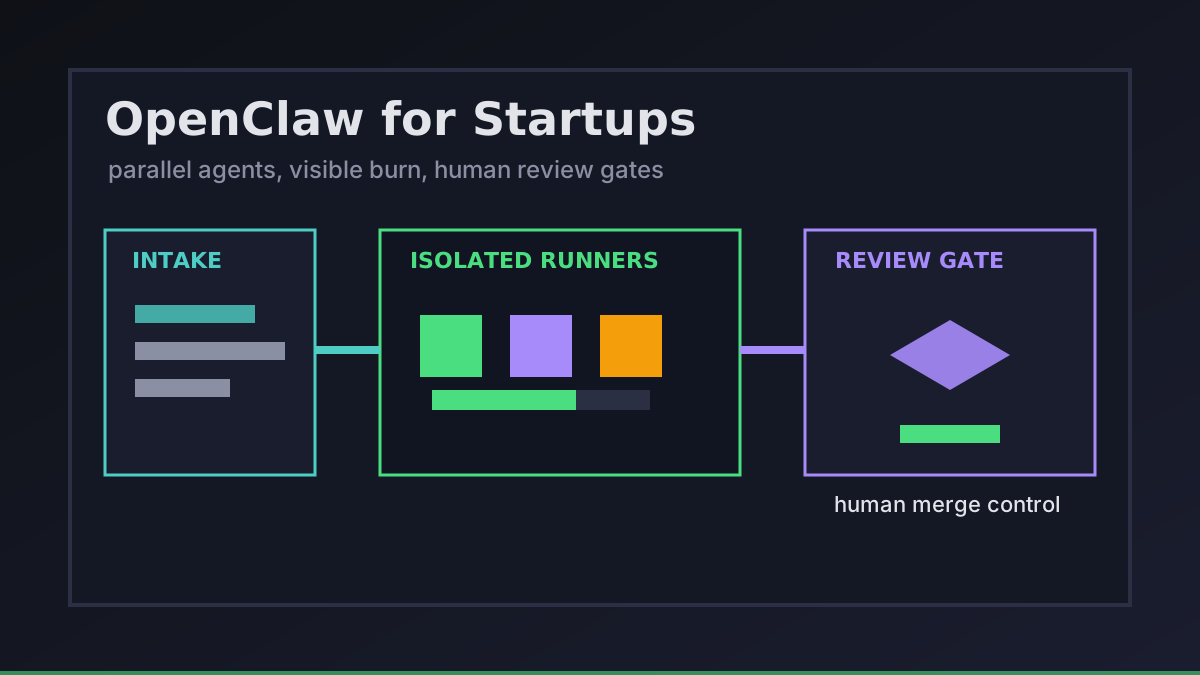
Startups do not have spare engineering time. A useful agent workflow should turn small, well-scoped tasks into reviewed branches while the team keeps product judgment, credentials, and deploy control. That is the promise behind OpenClaw-style work: more parallel execution without pretending every agent can be trusted with the whole company.
Office Claws is not a native OpenClaw runtime. We position it as the desktop and VPS operations layer for OpenClaw-adjacent teams that want Codex-backed agents, isolated runners, visible logs, and predictable handoffs. If you are choosing the runtime first, compare the tradeoffs in OpenClaw vs Codex, then use this guide as the startup operating model.
The Startup Agent Stack
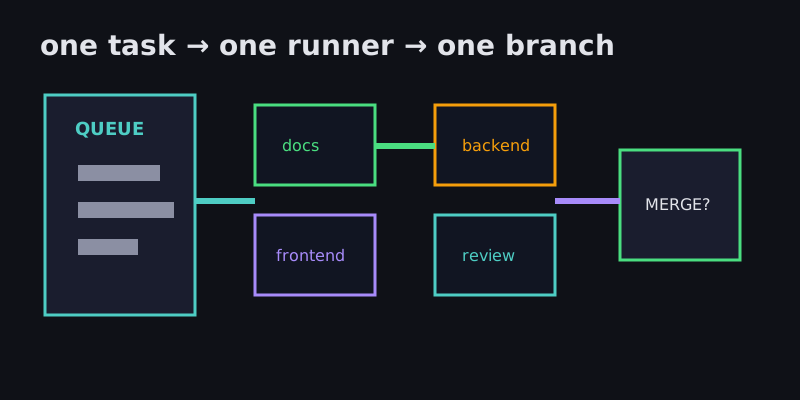
A startup stack should be boring on purpose. One queue, one runner per task, one branch per change, one review gate before merge. That keeps speed high without making the repository feel haunted.
| Layer | Startup default | Why it matters |
|---|---|---|
| Intake | short task brief with owner | avoids vague autonomous wandering |
| Runner | local desktop or small VPS | keeps work isolated from laptops |
| Runtime | Codex-backed agent when practical | avoids blocked subscription paths |
| Secrets | scoped tokens, never shared .env sprawl | limits blast radius |
| Review | GitHub branch plus CI/build output | makes async review possible |
| Deploy | human-approved production step | preserves customer safety |
Office Claws for OpenClaw users fits here as the control plane. The desktop view keeps the queue, runner status, and logs visible; VPS runners keep long jobs away from fragile terminal tabs; and the pricing model stays simple enough for a founder to reason about during a busy week.
Where Agents Help First
The best first use cases are narrow, reversible, and easy to validate. We would not start by asking an agent to redesign billing. We would start with the work that already has obvious acceptance checks.
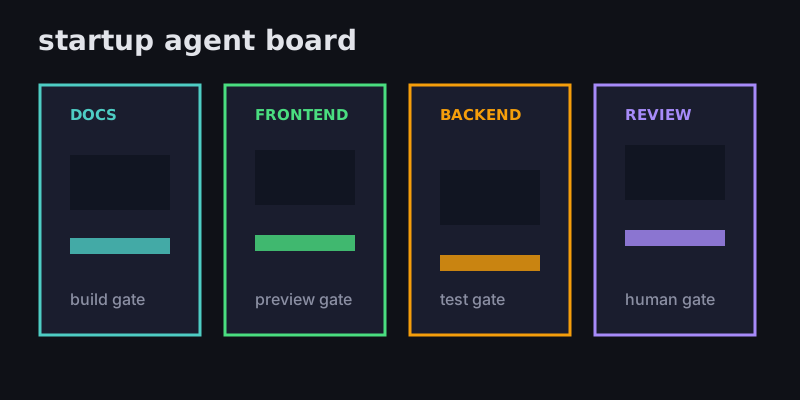
startup_agent_lanes:
  docs:
    paths: ["website/content/**", "docs/**"]
    gate: "npx velite build && npm run build"
  frontend_polish:
    paths: ["website/src/**"]
    gate: "npm run build"
  backend_fix:
    paths: ["backend/**", "cmd/**", "internal/**"]
    gate: "go test ./..."
  release_review:
    paths: ["*"]
    gate: "human merge approval"
These lanes are intentionally plain. They make it clear which tasks belong on a cheap background runner, which tasks need a stronger review, and which tasks should stay human-led. For remote execution details, see OpenClaw on VPS and OpenClaw remote agents.
Keep Burn Rate and Risk Visible
A small team can move fast only if the costs are visible. Agent work should have budgets the same way cloud infrastructure has budgets. Set a time box, token posture, runner size, and stopping rule before the task starts.
| Budget signal | Practical rule |
|---|---|
| Time | stop or ask after 45–60 minutes |
| Scope | touch only listed paths unless approved |
| Spend | prefer small VPS runners for background work |
| Evidence | final reply includes commit, diff summary, and validation |
| Deploy | production waits for a human gate |
This is where Office Claws is deliberately conservative. It is better for a startup to have three visible agents with clear limits than ten hidden shells that nobody remembers launching. The OpenClaw desktop manager article explains the local control pattern, and OpenClaw cost comparison covers the economics.
Recommendations for Founders
Start with one repeatable lane, not an agent free-for-all. Pick docs, bug fixes, or test cleanup; require branches and validation; then expand when the team trusts the workflow.
Our default startup recommendation:
- Keep product decisions human-owned.
- Put each agent task on its own branch and runner.
- Use scoped credentials and avoid shared secrets.
- Track cost and runtime per task.
- Merge only after a human review gate.
That pattern gives startups the useful part of OpenClaw-style autonomy without handing the whole company to an unattended terminal. Office Claws is the practical layer around that pattern: local control, VPS execution, visible logs, and Codex-backed workflows when they are the honest fit.