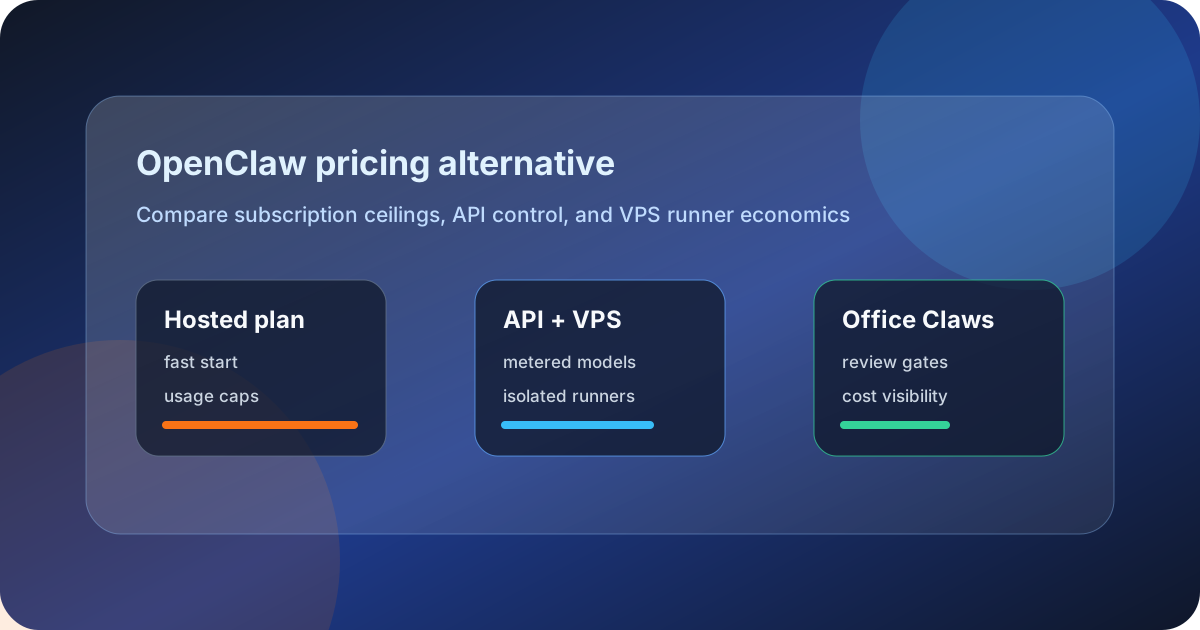
Why OpenClaw Pricing Needs an Alternative Plan
OpenClaw-style coding agents are most valuable when they can keep working after you step away: one bug fix, one branch, one log stream, and one reviewable result. Pricing becomes painful when that workflow depends on a single hosted subscription with opaque queue limits, blocked sessions, or a plan that works for demos but not for daily engineering.
The better question is not “what is the cheapest agent?” It is “which pricing model lets us run useful autonomous work without surprise bills or stalled tasks?” For many teams, the answer is a hybrid: keep a hosted plan where it is convenient, move heavier execution to metered Codex-backed runners, and manage those runners through Office Claws so budgets, branches, logs, and deploy gates stay visible.
Office Claws is not a native OpenClaw runtime. The honest fit is operational: it gives OpenClaw users and OpenClaw-adjacent teams a local desktop and VPS control layer for Codex-backed work. If you are still comparing runtimes, start with OpenClaw vs Codex, then use this article to choose the cost model.
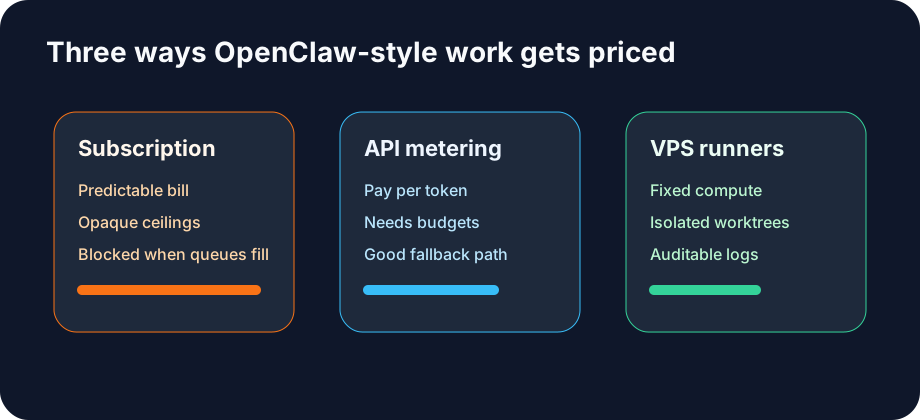
The Three Pricing Models to Compare
| Model | Best fit | Hidden risk | Office Claws role |
|---|---|---|---|
| Hosted subscription | Light usage, fast onboarding, individual experimentation | Queue limits, blocked sessions, unclear marginal cost | Keep as a convenience path, not the only execution lane |
| API metering | Teams that want usage tied to actual work | Cost spikes without budgets and token visibility | Track tasks, branches, and model spend per run |
| VPS runners | Long-running or parallel coding tasks | Operational burden if every runner is hand-managed | Provision, isolate, monitor, and stop remote agents |
A subscription feels predictable until the work becomes parallel. API billing feels risky until each task has a budget and a stop rule. VPS runners feel cheap until logs, secrets, and cleanup become someone’s unpaid maintenance job. A good OpenClaw pricing alternative makes those tradeoffs explicit instead of hiding them in a monthly plan.
When a Subscription Is Still Enough
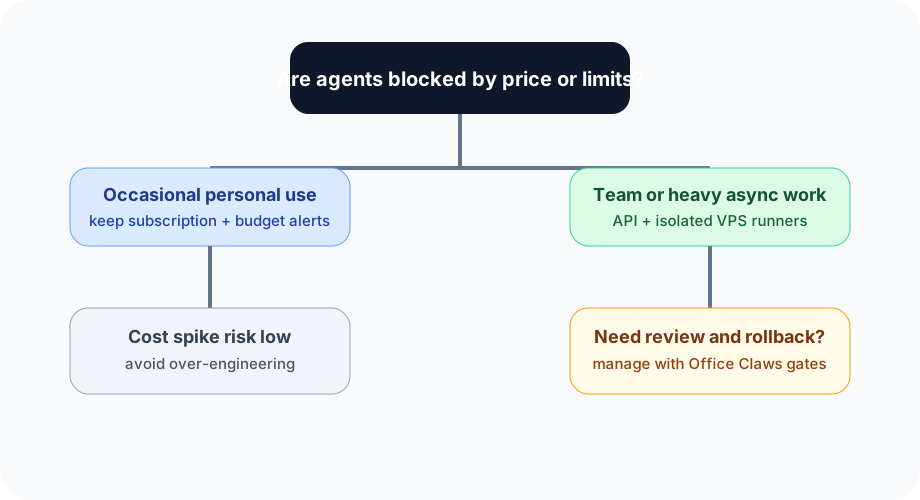
Do not migrate just because a spreadsheet says API tokens can be cheaper. A hosted subscription can remain the right choice when one developer runs occasional interactive sessions, tasks are short, and blocked queues do not interrupt paid work. In that case, keep the setup simple and add only lightweight guardrails: branch before large edits, record what the agent changed, and avoid pasting broad production secrets into any chat or terminal.
The moment the workflow becomes team-shaped, the economics change. If agents are expected to handle backlog tasks overnight, run on separate branches, or produce several reviewable pull requests per day, you need pricing that scales with managed work rather than with an individual seat.
When API + VPS Becomes the Better Alternative
API-backed agents are easier to justify when every task has a scope, a maximum budget, and a clear result. Instead of paying for a vague promise of “more agent time,” you pay for specific work: generate a migration draft, update a page, fix a failing test, or prepare a release note. VPS runners add a second advantage: compute is fixed-cost, isolated, and disposable.
That is why Office Claws focuses on the operating layer around Codex-backed runners. A useful task record should show:
- which branch the agent used;
- which model and budget were assigned;
- where the logs and validation output live;
- whether secrets were available to the runner;
- who approved merge or deploy.
This is the same pattern behind OpenClaw desktop manager and OpenClaw monitoring: make agent work observable before you make it autonomous.
A Simple Cost-Control Playbook
Start with three budgets: interactive debugging, background implementation, and heavy refactor. Give each category a default model, timeout, and stop rule. Interactive tasks can use a higher-capability model because a human is watching. Background implementation should use strict scope and validation. Heavy refactors should require an explicit approval before the runner burns hours across a large codebase.
Then add review gates. A cost-controlled agent system should stop before merge, before deploy, and before any command that needs broad production credentials. This protects the budget and the codebase at the same time. If the agent cannot prove the change with npm run build, tests, or a preview, it should not keep spending tokens trying random fixes forever.
Recommended Setup for OpenClaw Users
For most OpenClaw users looking for a pricing alternative, the practical setup is:
- Keep the current hosted workflow for quick interactive tasks.
- Move repeatable background work to Codex-backed API tasks with per-run budgets.
- Run those tasks on isolated VPS worktrees instead of shared local checkouts.
- Use Office Claws to watch logs, branches, validation, and stuck tasks.
- Require human review for merges, deploys, and secrets escalation.
That gives you the important part of OpenClaw-style autonomy without making cost control a mystery. You still get async coding help, but the economics are tied to visible tasks and reviewable output.
Related Reading
- OpenClaw vs Codex — compare runtime and cost tradeoffs.
- Office Claws for OpenClaw users — the desktop control layer.
- OpenClaw API cost — model spend and token budgeting.
- OpenClaw VPS manager — remote runner operations.