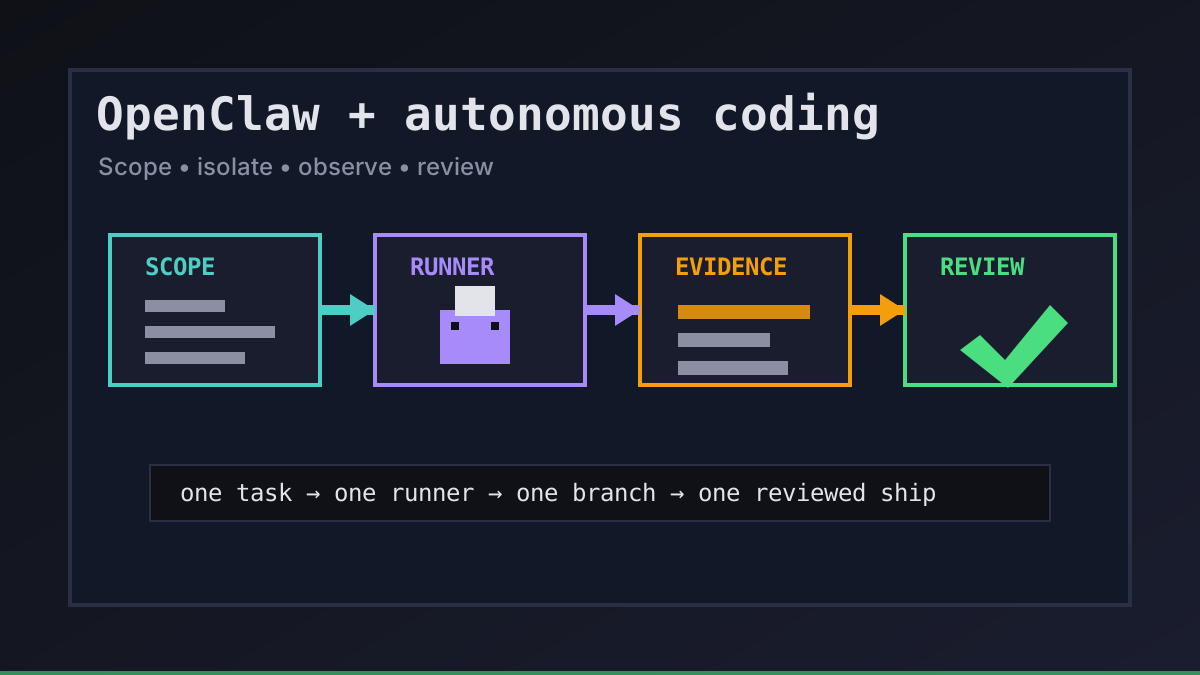
OpenClaw and autonomous coding are easy to overhype. The useful version is not a magic developer replacement; it is a disciplined operating model where agents can do real work without silently taking over the repo, the budget, or production.
Office Claws is not a native OpenClaw runtime. We use it as the desktop and VPS control layer for OpenClaw-adjacent, Codex-backed workflows: queue the work, isolate the runner, watch the logs, and keep review gates in the path. If you are comparing runtime choices first, start with OpenClaw vs Codex and Office Claws for OpenClaw users.
OpenClaw and Autonomous Coding Need an Operating Loop
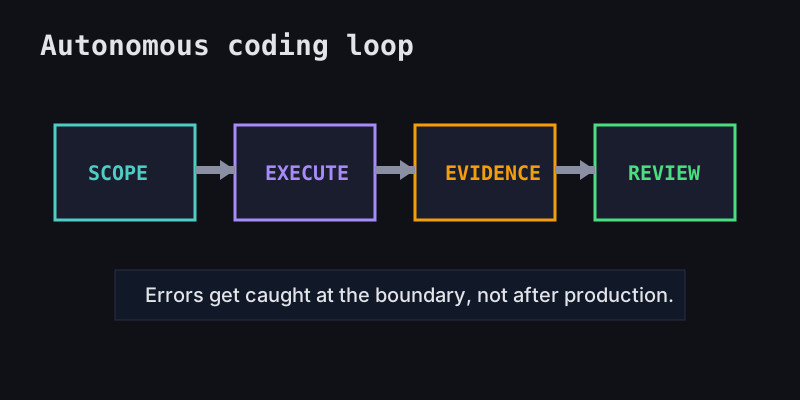
Autonomous coding works when every task moves through a visible loop. The loop matters more than the model name because it decides where mistakes are caught.
| Stage | What the agent does | What the operator controls |
|---|---|---|
| Scope | reads the goal and nearby files | repo, branch, allowed paths |
| Execute | edits, tests, and summarizes | runner, timebox, cost ceiling |
| Evidence | reports commands and diff intent | logs, build output, screenshots |
| Review | opens a branch or PR | merge decision and deploy gate |
That loop keeps autonomy useful without turning it into background chaos. A good task can run for an hour on a VPS, but it should still end with a branch, evidence, and a human-readable recommendation.
Start With Narrow Tasks
The safest OpenClaw autonomous coding tasks are not vague product goals. They are small contracts:
workflow: autonomous-coding-task
repo: office-app
branch: agent/fix-settings-empty-state
allowed_paths:
  - website/src/app/settings/**
  - website/content/**
gates:
  - npm run build
  - human-review
This is the same habit we recommend in OpenClaw workflow examples: give the agent enough room to solve the task, but not enough room to redesign the product by accident. If the task expands, the right output is a summary and a follow-up task.
Use Isolation as the Default
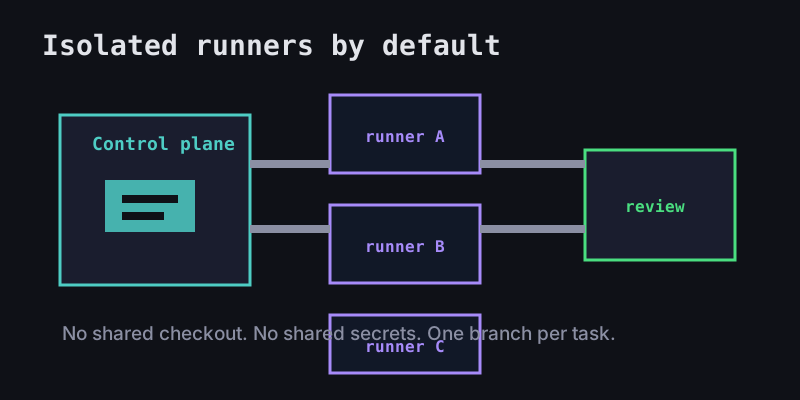
Autonomous coding becomes risky when every agent shares the same checkout, shell history, and environment variables. For OpenClaw-style work, isolation should be the boring default.
Use one active runner per task. Prefer a clean worktree or disposable VPS runner. Keep secrets local or scoped. Stream logs somewhere the operator can inspect without SSH archaeology. Pair this with the deeper OpenClaw security best practices checklist before agents touch production-adjacent repos.
Office Claws helps by making local and VPS runners visible from one control surface. The execution path can be Codex-backed, while the operating model stays OpenClaw-friendly: visible queues, durable background tasks, scoped credentials, and review before merge.
Decide What Autonomy Is Allowed to Finish
Not every task should finish the same way. The important decision is where the agent stops.
| Task type | Agent may finish with | Human should own |
|---|---|---|
| docs update | committed branch and build output | final copy approval |
| UI bug fix | PR, screenshot, test result | merge decision |
| dependency update | changelog summary and passing checks | risk acceptance |
| production change | deployment plan and rollback notes | deploy approval |
This boundary prevents “autonomous” from meaning “unreviewed.” Agents are good at doing the tedious pass: reading files, applying a patch, running validation, and explaining the diff. Humans stay responsible for product judgment, security tradeoffs, and production changes.
What To Build Next
If you are adopting OpenClaw and autonomous coding, build the operator loop before chasing complex orchestration:
- One task record with owner, branch, allowed paths, and success gate.
- One isolated local or VPS runner per active task.
- Durable logs and status that survive laptop sleep.
- A validation command the agent must run before reporting done.
- A review path through PRs, screenshots, or release notes.
Then add concurrency limits, usage tracking, and cost controls. For remote execution, OpenClaw VPS manager explains the runner side; for broader architecture, read OpenClaw agent architecture.
Autonomous coding gets practical when it becomes observable. Office Claws for OpenClaw users is built around that principle: let agents work, but keep scope, runners, secrets, logs, and shipping decisions under control.