Why OpenClaw Teams Need an Operating Model
OpenClaw-style agents are powerful enough to change real production code, so a team cannot treat them like private terminal experiments. The hard part is not launching one agent. The hard part is letting several people launch agents without losing ownership, secrets, budget control, or review quality.
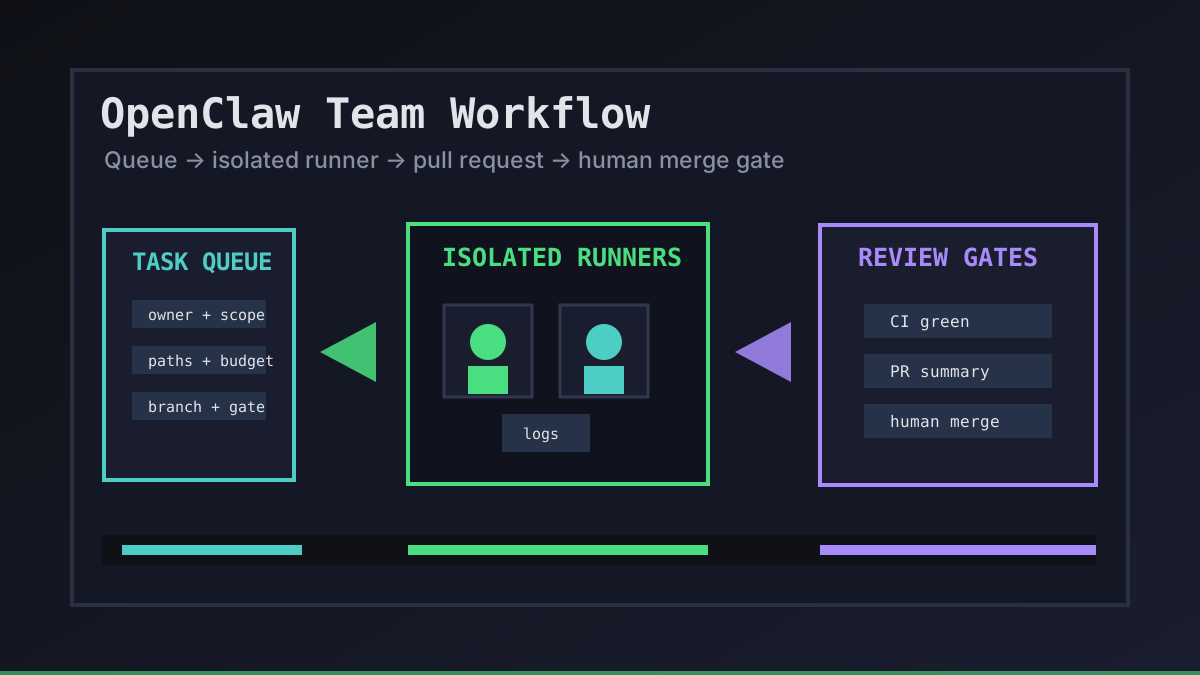
Office Claws is not a native OpenClaw runtime. We use the same operating lessons for Codex-backed agents: one request enters a queue, one runner owns the task, one branch carries the diff, and one review gate decides whether it ships. If you are still choosing the runtime, start with OpenClaw vs Codex, then use this workflow as the team layer around the work.
The Team Workflow Contract
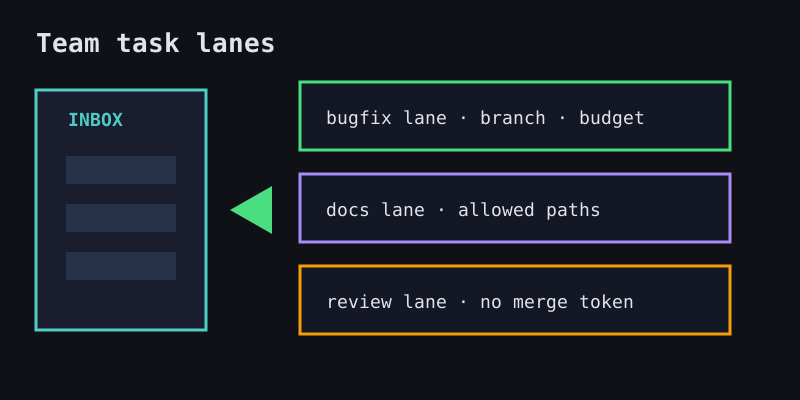
A useful team workflow starts before the agent sees the repository. Every task needs a short contract that says who requested it, what it may touch, how expensive it may become, and which checks prove it is done.
| Contract field | Example | Why it matters |
|---|---|---|
| Owner | gleb or frontend-oncall | someone can answer scope questions |
| Lane | bugfix, docs, migration, review | runners can be sized and isolated correctly |
| Allowed paths | website/content/blog/** | prevents helpful but unrelated edits |
| Branch | agent/team-workflow-guide | keeps every diff reviewable |
| Budget | 45 minutes / medium tokens | stops silent cost creep |
| Exit gate | npx velite build && npm run build | turns completion into evidence |
Office Claws for OpenClaw users fits this contract as the control layer: humans queue the work from the desktop, runners execute on local or VPS machines, logs stay visible, and provider keys do not need to live inside every remote shell. For the runner model, see OpenClaw on VPS and the OpenClaw desktop manager guide.
Roles That Keep Agents Useful
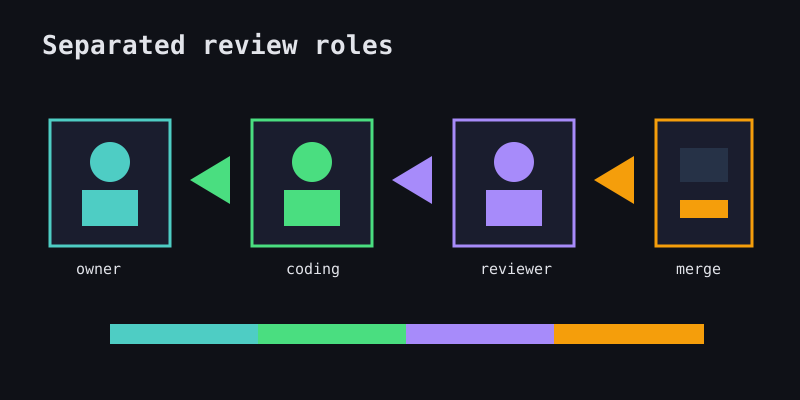
We like separating team roles instead of giving every agent the same broad instruction. A coding agent can write the patch. A reviewer agent can inspect the PR. A human keeps the merge button. That separation is boring in the best way.
request:
  owner: frontend-oncall
  task: fix-empty-state-copy
  branch: agent/fix-empty-state-copy
  runner: vps-small-03
  allowed_paths:
    - website/src/app/**
    - website/content/**
  reviewers:
    - human: product-lead
    - agent: reviewer-security-lite
  gates:
    - npm run build
    - pull_request_required
The manifest is intentionally small. It gives the agent enough room to solve the problem while making it obvious when the work has drifted. If a task needs broader access, the team should widen the contract deliberately instead of letting the agent discover new permissions mid-run.
Review Gates for Shared Repos
Team trust comes from repeatable gates, not from believing every agent summary. Require each OpenClaw-adjacent task to finish with the same evidence:
- Branch and commit hash.
- Summary of changed files and intent.
- Validation output, including failures.
- Risks, assumptions, and follow-up work.
- PR or compare URL for human review.
That evidence makes async review possible. A teammate can open the PR, read the agent's summary, inspect the diff, and compare it with CI output without reconstructing the whole terminal session. For a deeper GitHub pattern, use the OpenClaw GitHub workflow article.
| Gate | Agent can do | Human keeps |
|---|---|---|
| Draft PR | push branch, write summary | decide whether scope is correct |
| CI | run tests, fix obvious failures | approve skipped or flaky checks |
| Review | suggest changes, flag risks | accept product and architecture tradeoffs |
| Merge | prepare final commit | press merge and own rollout |
Recommended Office Claws Setup
A practical OpenClaw team workflow looks like this:
- Put every agent request into a visible queue with an owner.
- Assign one isolated runner and one branch per task.
- Keep secrets and release credentials outside the runner by default.
- Stream logs so the team can notice loops, stalls, and scope drift.
- Require build output and a PR before anyone calls the work done.
- Let humans merge after reading the diff, summary, and risky files.
This is the honest value of Office Claws in an OpenClaw team: not replacing judgment, and not pretending to own the runtime, but making the operating layer visible. Teams get desktop management, VPS runner isolation, Codex-backed execution when it is the practical path, and review gates that make autonomous work safe enough to use every day.
Related Reading
- OpenClaw vs Codex — compare runtime and operations tradeoffs.
- Office Claws for OpenClaw users — the desktop management layer.
- OpenClaw GitHub Workflow — branches, CI, and PR handoffs.
- OpenClaw Security Best Practices — runner isolation and safer credentials.