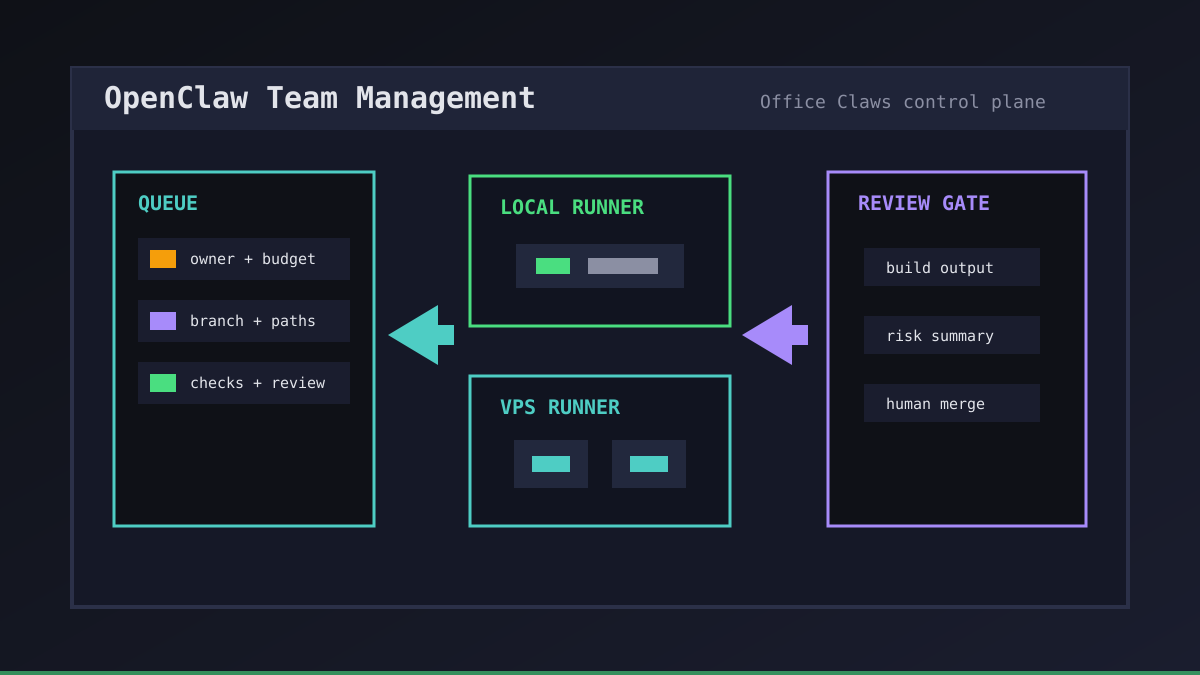
OpenClaw-style work gets messy when every developer starts a private agent from a different shell. The first win is speed. The second problem is management: who owns the task, which runner is safe, how much can it spend, and what proves the patch is ready?
Office Claws is not a native OpenClaw runtime. We use OpenClaw demand as the signal for a practical operating layer: desktop management, VPS runners, Codex-backed execution when that is the safer path, and review gates humans can trust. If you are still comparing runtimes, start with OpenClaw vs Codex, then use this guide to manage the team around the agents.
Why OpenClaw Team Management Needs a Control Plane
A team does not need more invisible terminals. It needs a small control plane that turns agent work into owned, reviewable units. Without that layer, agents compete for the same checkout, share secrets accidentally, and leave teammates guessing whether a task is still running or silently stuck.
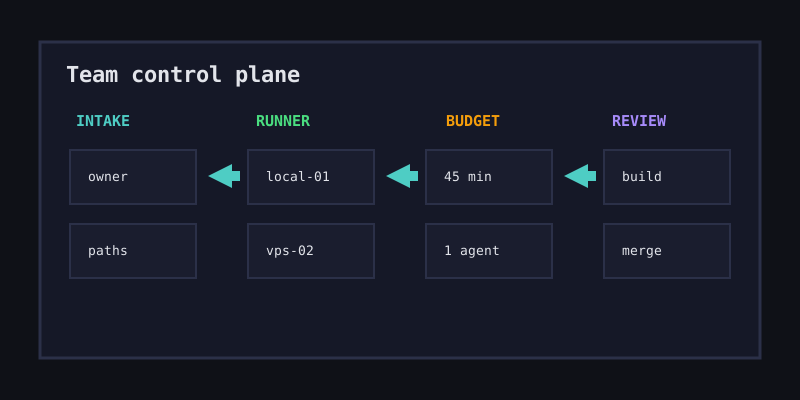
The control plane should answer five questions before any agent edits code:
| Management question | Safe answer |
|---|---|
| Who owns this request? | A named teammate or rotation |
| Where can it run? | One local or VPS runner with scoped access |
| What can it touch? | A branch and allowed path list |
| How much can it spend? | A time, token, or budget cap |
| Who ships it? | A human after checks and review |
Office Claws for OpenClaw users is built around that shape: visible requests, isolated machines, streamed logs, and a clean handoff to GitHub review.
The Team Management Loop
Good management is a loop, not a dashboard screenshot. Every agent task should move through intake, assignment, execution, review, and cleanup. The loop is intentionally boring because boring is what lets a team run several agents without turning the repo into a mystery novel.
agent_task:
  owner: platform-oncall
  branch: agent/fix-billing-empty-state
  runner: vps-small-02
  allowed_paths:
    - website/src/app/**
    - website/content/**
  budget:
    max_minutes: 45
    max_parallel_agents: 1
  gates:
    - npm run build
    - human_review_required
That manifest does not solve the task. It defines the box. If the agent needs a wider scope, the owner changes the contract deliberately instead of letting the runner improvise with production credentials or unrelated files.
Runners, Secrets, and Budget Limits
OpenClaw team management gets risky when runner policy is implicit. We prefer one task, one runner, one branch, and one log stream. Local runners are useful for fast product work. VPS runners are better for long-running jobs, dependency-heavy builds, and tasks that should not touch a developer laptop.
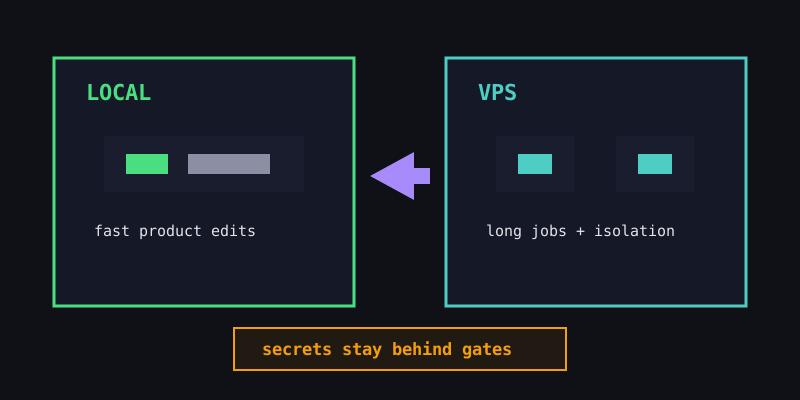
The important part is keeping secrets outside the default path. A runner should receive only the credentials it needs, and release keys should stay behind a separate deploy gate. That keeps a coding task from becoming a production operation just because an agent found a convenient token in .env.
Budget limits belong next to runner limits. A team should be able to pause, cancel, or downsize work before a background agent burns a day of tokens. For cost planning, pair this guide with OpenClaw cost comparison and OpenClaw API cost.
Review Gates Managers Can Trust
Managers do not need to read every token of an agent session. They need compact evidence. At the end of a task, require the branch, commit, changed-file summary, validation output, and known risks. If the agent cannot provide that, it is not done.
| Gate | Agent responsibility | Human responsibility |
|---|---|---|
| Branch | Push one focused diff | Confirm scope matches the request |
| Build | Run the agreed checks | Decide whether failures block shipping |
| Review | Explain changes and risks | Own product and security judgment |
| Merge | Keep the handoff clean | Press merge and own rollout |
This is where Office Claws complements OpenClaw-style workflows. It keeps the operational record visible while humans keep final authority. For the GitHub side of the loop, see OpenClaw GitHub workflow and OpenClaw team workflow.
Recommended Office Claws Setup
Start small: one shared queue, two runner classes, one review policy, and a weekly audit of failed or abandoned agent tasks. Do not give every agent broad repo and deploy access on day one.
Our recommended setup for OpenClaw team management is:
- Route requests through Office Claws instead of private shells.
- Assign one owner, runner, branch, and budget per task.
- Keep secrets scoped and release credentials separate.
- Stream logs so teammates can spot loops and stalls.
- Require build output and human review before merge.
- Track failures so prompts, runner images, and policies improve over time.
That is the honest value: Office Claws does not replace judgment, and it does not claim to own OpenClaw. It gives teams a practical desktop and VPS management layer for OpenClaw-adjacent, Codex-backed agent work that is visible enough to trust.
Related Reading
- OpenClaw vs Codex — choose the practical runtime and operating model.
- Office Claws for OpenClaw users — desktop management for agent work.
- OpenClaw team workflow — roles, queues, and PR handoffs.
- OpenClaw security best practices — safer runners and credentials.